

If you had to abandon ship right now, would your yacht abandon ship bag water supply last three days or three weeks? Most sailors pack heavy stacks of 125ml foil pouches. They hope the weight doesn't sink the life raft before help arrives. It's a heavy, finite gamble. You're left counting every drop while waiting for a rescue that might be days away. This reliance on static rations creates a dangerous ceiling on your survival time.
We agree that carrying hundreds of pounds of water isn't practical. You need a lighter, more efficient solution that doesn't rely on batteries or complex electronics. This article shows you how to transform your ditch bag from a limited warehouse of rations into a sustainable freshwater production station. We'll explain how manual desalination provides infinite security. Learn to use tools like the QuenchSea 3.0 to produce 4 to 6 liters of water per hour using nothing but mechanical power and reverse osmosis technology. We'll also cover how these devices meet SOLAS requirements while stripping away unnecessary bulk from your emergency gear.
Key Takeaways
- Prioritize hydration by understanding the "Rule of 3" and why freshwater is your most critical asset after immediate flotation.
- Compare the "finite" warehouse of rations against the "infinite" factory of manual desalination to extend your survival window indefinitely.
- Optimize your yacht abandon ship bag water supply by replacing heavy, bulky pouches with a lightweight, high-output mechanical desalinator.
- Evaluate essential hardware specs like flow rate and corrosion resistance to ensure your equipment survives the harsh marine environment.
- Master the organization of your ditch bag, including the integration of pre-filters and collection bags for a streamlined production process.
Yacht Abandon Ship Bag Essentials: The Role of Freshwater
Current international lifeboat equipment standards mandate specific provisions to keep crews alive. SOLAS Chapter III requires 1.5 liters of freshwater per person. For a crew of four, that is only 6 liters per day. This is a survival minimum. It is not a comfort level. Beyond the physiological need, water provides psychological stability. Thirst breeds panic. Panic leads to poor decision-making in high-stakes environments. Reliable water security allows the crew to remain calm and focused on signaling for help.
The Rule of 3s in Marine Survival
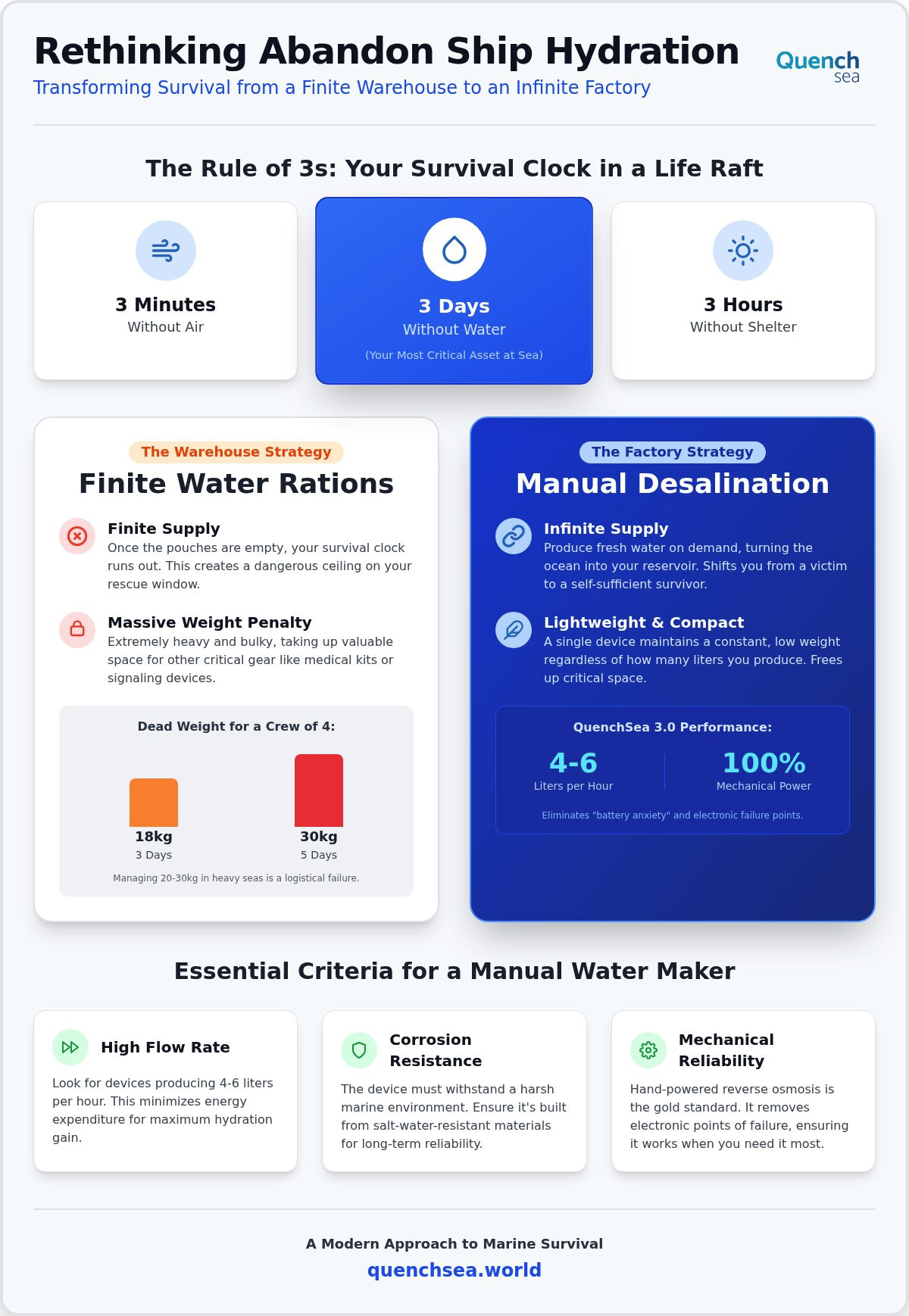
Survival logic follows the Rule of 3s: 3 minutes without air, 3 hours without shelter in extreme weather, and 3 days without water. The marine environment is uniquely hostile, and for those who spend their lives on the water, you can check out Ocean Motion Wear for performance-driven gear. Salt spray and solar radiation accelerate fluid loss through perspiration and respiration. Dehydration is a cognitive decline before it is a physical one. As your body loses water, your ability to operate signaling equipment or manage raft stability diminishes. Your water supply directly dictates the length of your search-and-rescue window. If your supply is finite, your survival window is also finite.
Traditional Water Rations: The Weight Problem
Relying solely on foil pouches is a storage-only strategy. It creates a massive weight penalty. Standard yacht abandon ship bag water rations are heavy and take up valuable volume that could be used for medical kits or signaling gear. Consider the math for a crew of four over a 72-hour period. At 1.5 liters per person per day, you must carry 18 liters of water. This adds 18kg of dead weight to your equipment. A 20kg grab bag is nearly impossible to manage in heavy seas or while boarding a raft from the water. It is bulky and difficult to secure. If your drift lasts longer than the initial three days, the storage-only strategy fails completely. You don't need a warehouse of pouches. You need a factory that produces freshwater on demand.
Manual Desalination vs. Emergency Water Rations
Choosing between rations and a desalinator is a choice between a warehouse and a factory. Emergency rations represent a finite countdown. Once the last pouch is empty, your survival options vanish. In contrast, a manual system provides an infinite supply of yacht abandon ship bag water. It shifts your status from a victim of circumstance to a self-sufficient survivor. This transition is essential for any crew facing a prolonged drift where rescue timelines are uncertain.
The weight-to-water ratio becomes unsustainable during an extended emergency. For a crew of four over five days, you require 30 liters of water. That equates to 30kg of dead weight. Managing a 30kg grab bag in a pitching life raft is a logistical failure. It is heavy, bulky, and difficult to secure. A manual desalinator maintains a constant, low weight regardless of how many liters it produces. It scales with your needs without adding mass to your equipment. Maintenance for these devices is minimal. Regular seal inspections and membrane preservation are the only requirements to ensure long-term readiness.
The Reliability of Hand-Powered RO
Electronics and salt water are natural enemies. Battery-powered emergency water makers introduce "battery anxiety" into an already high-stress environment. If the circuit fails or the charge depletes, the device becomes dead weight. Mechanical systems rely on physical leverage and high-pressure seals. They have fewer points of failure. Manual reverse osmosis is the gold standard for non-electric ocean survival. By removing the need for power, you eliminate the most common cause of safety gear failure. It is a rugged, hardware-focused solution for a hardware-focused problem.
Calorie Expenditure vs. Water Yield
Critics often claim that the physical effort of pumping consumes more water than the device yields. This is a myth based on outdated technology. Modern membranes in 2026 devices are engineered for high permeability at lower pressures. A high-efficiency tool like the QuenchSea 3.0 produces 4 to 6 liters per hour. The metabolic cost of this activity is minimal compared to the hydration gain. You aren't wasting energy; you're investing it in your most critical resource. To maximize efficiency and avoid exhaustion, implement a multi-crew rotation. Short, five-minute bursts keep the membrane active and the crew fresh. This collaborative effort ensures a steady flow of freshwater without compromising the physical state of the survivors.
Criteria for Selecting a Yacht Safety Water Maker
Selecting survival hardware is an engineering challenge. You need a device that balances physical size with high-output performance. In a life raft, every cubic centimeter is a premium. Your choice of yacht abandon ship bag water equipment must provide a high return on effort. It's not just about making water. It's about making enough water quickly so the crew can focus on other survival tasks. Reliability in a crisis depends on mechanical simplicity and rugged construction.
Flow Rate and Survival Hydration
Survival hydration is more than just drinking. You need water for cleaning salt from eyes, treating wounds, and managing heat stress. A device producing 3 to 4 liters per hour represents the industry sweet spot. This output exceeds the survival minimums for a small crew within a single hour of operation. Consistent output is critical. Modern reverse osmosis membranes maintain efficiency across varying sea temperatures. Cold water increases viscosity, making it harder to pump, while warm water can affect salt rejection. High-grade systems account for these variables to ensure the flow rate remains stable in any ocean basin.
Ruggedization for Abandon Ship Scenarios
Hardware must endure extreme mechanical stress. The moment you abandon ship is often violent. Your gear may be dropped, tossed into a raft, or crushed under other equipment. Stainless steel and high-grade polymers are non-negotiable materials. They offer the necessary corrosion resistance and impact protection for long-term storage in a damp, salty environment. Shock resistance is equally vital. If a single drop onto a fiberglass floor cracks the housing, the device is useless. For a deeper look at equipment standards, consult our Life Raft Water Supply: The 2026 Comprehensive Survival Guide.
Ease of use is the final metric. A stressed, cold, or injured sailor can't struggle with complex setups. The interface must be intuitive. Mechanical levers should provide maximum mechanical advantage to reduce fatigue. Finally, consider the form factor. Most yacht abandon ship bag water kits must fit within a 30L to 50L ditch bag alongside flares, radios, and medical supplies. A compact, streamlined design ensures you don't have to leave life-saving gear behind due to lack of space. Efficiency in design leads to efficiency in survival.
Packing Your Grab Bag for Maximum Hydration
Organization is the difference between survival and chaos. Your yacht abandon ship bag water strategy must account for both immediate needs and long-term production. A disorganized bag leads to lost components in high-stress environments. Secure your manual desalinator in a padded, accessible compartment. It shouldn't sit at the absolute bottom where it's crushed by heavier gear, nor should it be loose where it can be swept overboard. Placement should allow for rapid deployment even in low-light conditions or heavy seas.
Every desalinator requires a support ecosystem. Pack dedicated collection bags to store produced water. Include a 2-pack of replacement pre-filters and at least one spare RO membrane. These components are small but vital for maintaining output during a multi-week drift. You don't want to realize your membrane is fouled when you're 500 miles from the nearest coast. Pre-filtration is the primary defense against membrane fouling. Ensure these spares are vacuum-sealed to prevent salt-air degradation while in storage.
The "First 24 Hours" Strategy
Survival experts often recommend a "no water" first day, but this is a dangerous gamble in the marine environment. Instead, use your limited supply of emergency foil pouches during the first 24 hours. Do not deploy the desalinator immediately. Your body needs to acclimate to the raft environment and your heart rate needs to stabilize after the shock of abandonment. Pumping in the first hour of a crisis is physically inefficient and can lead to rapid exhaustion. Use this time to understand Why is Drinking Sea Water Dangerous? and focus on stabilizing the raft before starting water production.
Pre-filtration and Membrane Protection
Open ocean water contains more than just dissolved salts. It is a soup of plankton, algae, and suspended particulates. In some regions, you may encounter "red tide" or heavy silt near coastal areas. These contaminants will clog a high-pressure membrane in hours if not properly managed. Use a multi-stage pre-filter to strip away biological matter before it reaches the core. This extends the life of your equipment and ensures the water remains safe to drink. By protecting the membrane, you ensure the device continues to produce 4 to 6 liters per hour throughout the duration of your emergency. To secure your long-term hydration, equip your ditch bag with a manual desalinator today.
QuenchSea 3.0: The Core of Your 2026 Ditch Bag
Modern yacht safety requires more than just passive survival. It demands active, reliable hardware. The QuenchSea 3.0 is the professional choice for mariners who refuse to rely on finite rations alone. This device is an industrial-grade tool miniaturized for emergency use. It produces 4 to 6 liters of freshwater per hour. This output ensures that even a larger crew can maintain hydration without exhausting their physical reserves. Weighing only 1.2kg and measuring 25cm in length, it fits seamlessly into any standard yacht abandon ship bag water kit without displacing other essential gear.
Traditional hand pumps often failed due to high physical resistance and fragile internal components. The 3.0 model addresses these weaknesses through advanced hydraulic engineering. It utilizes a high-efficiency reverse osmosis membrane that requires significantly less force to operate than previous generations. The mechanical lever provides a high mechanical advantage. This allows even an injured person to produce water with minimal strain. By eliminating battery dependence and simplifying the internal valve system, the 3.0 model removes the technical barriers to ocean survival. It integrates into existing safety protocols as a primary source of hydration rather than a last-resort backup.
Engineered for the Unthinkable
The design philosophy is clear: simple, robust, and effective. In a survival craft, you don't need complex features; you need results. The QuenchSea 3.0 provides a psychological "safety floor." Knowing you can harvest freshwater from the ocean prevents the panic that often sets in when rations run low. It empowers the crew and changes the narrative from waiting for rescue to managing a sustainable resource. This confidence is a survival asset in itself. For a detailed breakdown of technical performance and membrane longevity, read the QuenchSea 3.0: The 2026 Buyer’s Guide.
Preparing for Your Next Passage
Safety equipment is only as good as the person operating it. Integrate the QuenchSea 3.0 into your pre-departure safety checklist. Ensure the pre-filters are clean and the membrane is preserved. Conduct a 5-minute drill with your crew before every offshore passage. Each member should know how to deploy the intake hose and operate the pump lever. This familiarity is vital when cold fingers and high adrenaline make simple tasks difficult. Don't leave your hydration to chance or a limited supply of foil pouches. Secure your crew’s water supply with QuenchSea 3.0 and ensure your yacht abandon ship bag water supply never runs dry.
Secure Your Survival Horizon
Survival at sea isn't a matter of luck; it's a result of mechanical preparation. By shifting your yacht abandon ship bag water strategy from finite rations to sustainable production, you eliminate the single greatest threat to your crew's endurance. Manual desalination provides a reliable, infinite safety net that functions regardless of battery life or electronics failure. High-performance hardware is the only way to ensure your search-and-rescue window remains open indefinitely.
The QuenchSea 3.0 embodies this mission-driven engineering. It's a compact, survival-grade tool that requires no batteries or fuel. This is why marine professionals and disaster relief teams worldwide trust it for life-critical hydration. You don't need the unnecessary weight of bulky water pouches. You need a tool that works as hard as you do in extreme environments. Confidence comes from knowing your gear won't fail when it matters most.
Equip your yacht abandon ship bag with QuenchSea 3.0. Take command of your safety and ensure that if the unthinkable happens, you have the tools to overcome it.
Yacht Survival Hydration: Frequently Asked Questions
Is a manual desalinator better than packing canned water in a grab bag?
A manual desalinator is superior because it transforms your yacht abandon ship bag water strategy from storage to production. Canned water is finite and heavy; 30 liters of rations weigh 30kg. A desalinator provides an infinite supply at a fraction of that weight. It scales to the duration of your drift. You can't carry enough cans for a month, but you can carry a desalinator.
How much water can a person realistically pump per hour with QuenchSea 3.0?
The QuenchSea 3.0 realistically produces 4 to 6 liters of freshwater every hour. This rate depends on the pumper’s consistency and the sea water temperature. Cold water requires slightly more effort due to higher viscosity. Even at a relaxed pace, a single user can exceed the daily survival requirements for an entire crew in a single session. This high output allows for wound cleaning and heat management.
Can children or elderly crew members operate a manual water maker?
Yes, the device is engineered for maximum mechanical advantage. The long lever handle reduces the physical force needed to drive the reverse osmosis process. Even crew members with limited upper body strength can operate the system effectively. It doesn't require high-speed pumping. A steady, rhythmic motion is all that's necessary to maintain flow. This ensures every survivor can contribute to the team's hydration needs.
Does a manual desalinator remove salt completely from seawater?
Reverse osmosis technology removes up to 98% of salts and dissolved solids from seawater. The resulting permeate is safe, potable water that meets international drinking standards. It also filters out bacteria, viruses, and microplastics. While it doesn't remove 100% of every molecule, the salt rejection rate is high enough to prevent dehydration and kidney stress. It turns hostile ocean water into a life-saving resource.
How long does the RO membrane last in an emergency desalination device?
The RO membrane in the QuenchSea 3.0 is rated to process between 1,000 and 2,000 liters of water. For a typical survival scenario, this capacity is effectively infinite. Even if a crew of four pumps 20 liters a day, the membrane would last over 50 days. Regular maintenance and the use of pre-filters ensure the membrane doesn't foul prematurely. It's built for the long haul and extreme conditions.
What happens if the grab bag water maker gets clogged with sand or debris?
The system uses a multi-stage pre-filtration process to catch sand, silt, and biological debris. If the pre-filter becomes clogged, you can simply clean or replace it with a spare. This protection prevents particulates from reaching and damaging the delicate RO membrane. Including a 2-pack of replacement pre-filters in your yacht abandon ship bag water kit is a standard safety protocol for long-range passages and coastal cruising.
Do I need to add minerals back into the water produced by a desalinator?
Adding minerals is not necessary for short-term survival. The primary goal in a life raft is preventing dehydration. While RO water is low in minerals, you'll receive necessary electrolytes from your emergency food rations. If your drift lasts for several months, mineral deficiency might become a secondary concern. In the immediate high-stakes environment of a shipwreck, pure hydration is the only metric that matters for your survival.
Is QuenchSea 3.0 approved for offshore racing safety regulations?
The QuenchSea 3.0 aligns with SOLAS and LSA Code standards for emergency equipment. Many offshore racing authorities allow manual desalinators to supplement or replace a portion of required water rations. You should always verify the specific requirements of your race committee or national maritime authority. Its compact, non-electric design makes it an ideal candidate for meeting rigorous safety inspections without adding significant weight to the vessel.