

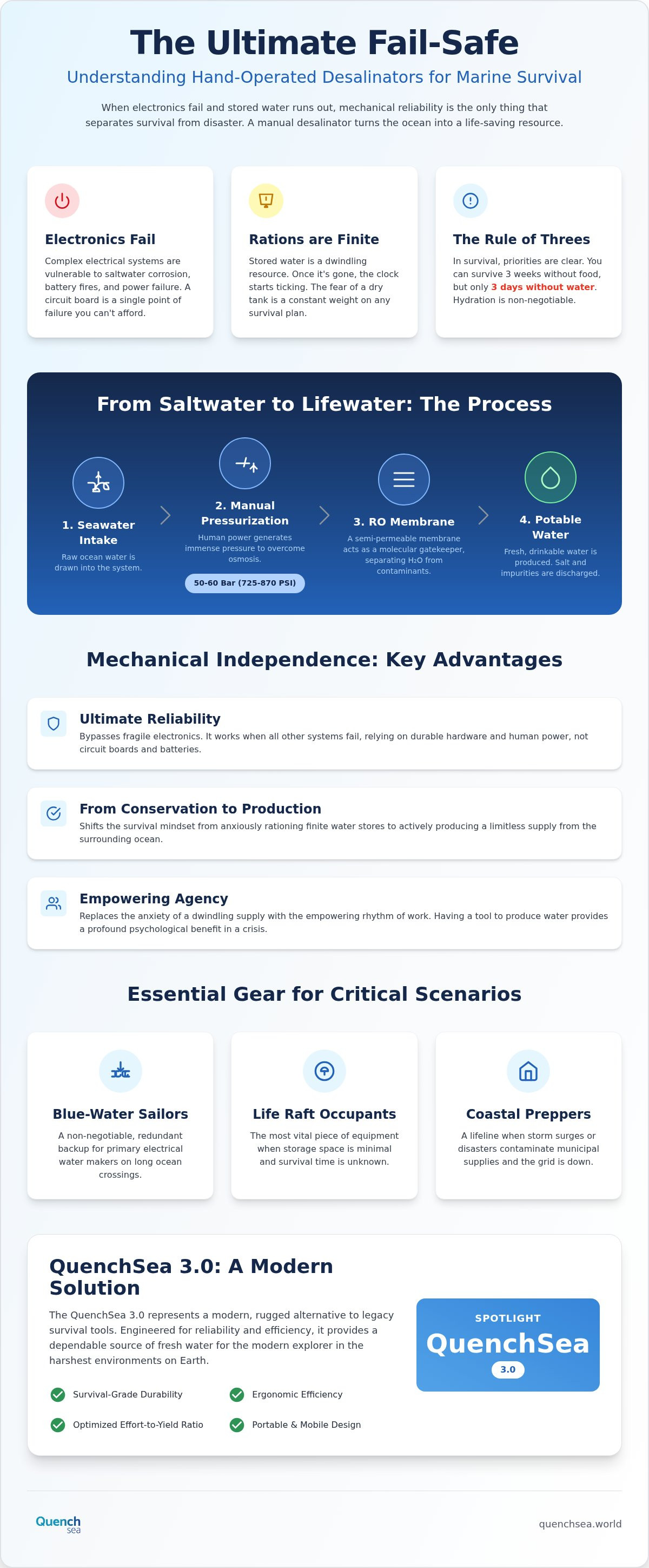
What happens to your survival plan when the batteries die and the horizon is nothing but salt water? Electronics fail. Batteries corrode. In a high-stakes marine emergency, your life depends on mechanical reliability, not a circuit board. You understand that water rations are finite. The fear of a dry tank is a constant weight. A hand operated desalinator transforms that anxiety into a calculated, mechanical solution. It's the ultimate tool for those who refuse to leave their hydration to chance.
This guide explores how modern manual desalinators, like the QuenchSea 3.0, provide a fail-safe freshwater source for marine survival and off-grid coastal preparedness. We'll strip away the confusing technical jargon surrounding RO membranes to focus on what truly matters: the physical effort versus water yield ratio. You'll learn how to integrate these non-electric devices into your kit with total confidence. From mechanical durability to ergonomic efficiency, we're covering the essential hardware that keeps you alive when every drop counts. It's time to master your own water security with survival-grade equipment built for the harshest environments on earth.
Key Takeaways
- Identify why a hand operated desalinator acts as the ultimate fail-safe when primary electrical water makers fail during marine emergencies.
- Grasp the core engineering of manual reverse osmosis and how membranes reject salt and pathogens using only human power.
- Learn to evaluate survival gear by analyzing the vital ratio between physical pumping effort and actual freshwater output.
- Master deployment techniques to protect your equipment from surface oils and debris during critical emergency operation.
- Discover how the QuenchSea 3.0 provides a rugged, modern alternative to legacy survival tools for remote coastal environments.
The Critical Role of Hand Operated Desalinators in Marine Survival
A hand operated desalinator serves as the ultimate fail-safe for maritime survival. It's a mechanical insurance policy against the unpredictable nature of the open ocean. While modern vessels rely on complex electrical systems, these systems are inherently fragile. A hull breach, battery fire, or simple alternator failure can render an electric water maker useless in seconds. When you're adrift, you can't afford a single point of failure. You need a tool that works regardless of your vessel's power state.
Manual desalination provides a critical advantage over emergency water rations. Stored water is a finite resource. Once the cans are empty, the clock starts ticking. A manual device turns the surrounding ocean into an accessible reservoir. It shifts the survival paradigm from conservation to production. This transition is vital for long-term endurance at sea. It ensures that your hydration isn't tied to the volume of your storage tanks but to your own mechanical capacity.
The primary users of this technology include:
- Blue-water sailors and ocean crossers who need a redundant backup for their primary systems.
- Occupants of emergency life rafts who have limited storage space for bulky water containers.
- Coastal residents and preppers facing potential infrastructure collapse or storm surges.
Why Non-Electric Backups are Non-Negotiable
Marine environments are hostile to electronics. Saltwater corrosion and constant vibration eventually degrade even the most robust wiring. In a survival scenario, the "Rule of 3" dictates your priorities. You can survive three weeks without food, but only three days without water. A manual hand operated desalinator ensures that water remains the one variable you can control. It bypasses the fragility of circuits and relies instead on durable, physical hardware.
The technology relies on manual Reverse Osmosis to force seawater through a membrane. This process requires no external power, only human effort. There's a profound psychological benefit to this mechanical independence. Having a tool that produces water on demand replaces the paralyzing anxiety of a dwindling ration with the empowering rhythm of work. It provides a sense of agency when everything else is failing. You aren't waiting for rescue; you're sustaining your own life.
Beyond the Life Raft: Coastal and Disaster Use
The utility of these devices extends far beyond the life raft. Coastal disaster relief often faces the same challenges as marine survival: plenty of water, but none of it is drinkable. Flooding and storm surges frequently contaminate municipal supplies with salt and silt. In these moments, a portable, hand-powered unit becomes a lifeline for entire families when the grid goes dark.
For those in high-risk zones, a portable unit is a vital component of a tactical kit. If you're forced to leave your home, your hydration source must be mobile and reliable. Integrating bug out bag water desalination ensures that coastal residents aren't tethered to failing infrastructure. It provides a mobile survival solution that functions where heavy, stationary systems cannot. Mechanical integrity is the only guarantee in a crisis. Your ability to pump water manually determines your resilience in the face of disaster.
The Engineering of Manual Reverse Osmosis: From Saltwater to Potable
A hand operated desalinator is a masterpiece of mechanical leverage. It doesn't rely on chemicals or heat. Instead, it utilizes the physics of Reverse Osmosis (RO) to transform seawater into life-sustaining freshwater. The process centers on a semi-permeable membrane. This membrane acts as a molecular gatekeeper. It possesses pores so microscopic that they allow water molecules to pass while rejecting larger salt ions, pathogens, and contaminants. This isn't just filtration; it's molecular separation at a survival-grade level.
The engineering challenge lies in the physics of fluids. To force water through this membrane, the device must overcome osmotic pressure. Osmotic pressure is the natural force that drives freshwater to move toward saltier water to achieve equilibrium. For standard seawater, a hand operated desalinator must generate between 50 and 60 bar (725 to 870 psi) of pressure to reverse this flow. Achieving this requires precision engineering and high-strength materials that can withstand extreme internal stress without failure.
This mechanical validation is explored in depth within this academic paper on hand-operated desalination, which highlights how manual systems must balance flow rates with human endurance. Every stroke of the pump is a calculated exchange of energy for hydration.
The Mechanics of Manual Pressure Generation
The hand pump serves as the engine of the system. It converts your kinetic energy into hydraulic pressure through a high-ratio piston assembly. Seal integrity is the most critical factor in this assembly. At 60 bar, even a microscopic leak will cause a total loss of pressure, rendering the device useless. Engineering a portable unit requires specialized seals that maintain their seat under heavy load and resist the abrasive nature of salt crystals. High-performance units ensure that every ounce of effort you exert translates directly into freshwater production.
Filtration Stages: More than Just Salt Removal
Modern desalination is a multi-stage process. The primary RO membrane is delicate. If silt, algae, or microplastics reach it, the membrane will foul and clog. Effective units utilize a series of pre-filters to catch these larger particles before they reach the high-pressure chamber. This multi-stage approach is essential for long-term membrane longevity in the field. Beyond salt, these systems are designed to strip away bacteria, viruses, and emerging threats like microplastics, ensuring the output is safe for immediate consumption.
For a technical breakdown of how these stages function in the latest hardware, refer to our guide on manual reverse osmosis seawater systems. Understanding the internal architecture of your gear is the first step toward total preparedness. If you're ready to secure your own fail-safe water supply, you can explore survival-grade desalination tools designed for the most demanding environments.
Comparing Manual Water Makers: Durability, Output, and Effort
Evaluating a hand operated desalinator requires a shift from luxury features to mechanical efficiency. In a crisis, your output is limited by your own physiology. Reliability is the only metric that matters. Legacy military-grade units have long set the standard for durability, but they often remain heavy and mechanically complex. Modern consumer-focused designs, like the QuenchSea 3.0, represent an evolution in this hardware. These newer iterations prioritize accessibility and weight without sacrificing the ruggedness required for survival. The framework for comparison should always focus on three pillars: Weight, Output, and Ergonomics.
The "Output per Stroke" metric is the most honest measure of a device's value. Efficiency isn't just about how much water a membrane can process. It's about how much effort you must exert to get it. If a pump requires excessive force to produce a trickle, you'll reach exhaustion before you reach hydration. High-performance units utilize reinforced composites and precision-engineered pistons to maximize this ratio. While traditional metals provide strength, they're heavy and prone to corrosion. Modern composites offer a "survival-grade" build quality that resists salt-spray environments while remaining light enough for a single user to operate for extended periods.
Weight vs. Portability in Emergency Gear
A desalinator must be light enough to fit in a grab-bag, yet heavy enough to provide a stable base during operation. If a unit is too flimsy, the high-pressure requirements of reverse osmosis will cause the housing to flex or fail. There's a constant trade-off between pump size and water volume. Larger pumps produce more water but add bulk. This Purdue University engineering project highlights that the ideal survival device balances these factors to ensure the tool is actually present when the emergency occurs. A tool left on the dock because it was too heavy is useless.
The Human Factor: Pumping Effort over Time
The human factor is the most overlooked variable in survival specs. Reality check: most survivors aren't fresh athletes. Fatigue sets in quickly when you're dehydrated and stressed. Handle design and leverage are critical. A well-designed hand operated desalinator uses ergonomic grips and optimized stroke lengths to reduce the caloric cost of water production. When selecting a manual water maker for boat use, consider the reality of operating it on a pitching deck. You need a device that allows for a sustainable rhythm of 30 to 40 strokes per minute. Anything more demanding becomes a liability in a long-term survival scenario.
Deployment and Operation: Maximising Freshwater Yield in Emergencies
Operating a hand operated desalinator in high-stakes environments requires more than brute force. It demands tactical precision. Efficiency is the difference between hydration and exhaustion. To begin deployment, secure the unit to a stable surface. In a life raft, use the provided tethers to anchor the device to the floor or a structural tube. This stability allows you to focus your energy on the pump stroke rather than fighting the device's movement. A loose unit wastes kinetic energy and increases the risk of mechanical damage.
Intake hose placement is critical for membrane longevity. Most contaminants, such as fuel, surface oils, and floating debris, congregate at the water's surface. These substances will foul a membrane instantly. Drop the intake hose at least 12 to 18 inches below the surface. Use a small weight if necessary to keep the strainer submerged. This ensures the hand operated desalinator draws the cleanest possible water from the start. Avoid areas with visible kelp or heavy silt, as these will clog your pre-filters and increase the effort required for every stroke.
Ergonomic Pumping for Long-Term Survival
Survivors often make the mistake of pumping with their arms alone. This leads to rapid lactic acid buildup and early fatigue. Instead, utilize your core and legs. Position your body so you can lean into the downstroke. This uses your body weight to generate the necessary 50 to 60 bar of pressure. Maintain a steady, deliberate rhythm. Avoid rapid, frantic bursts that spike internal pressure and waste energy. Your goal is a sustainable pace that you can maintain for an hour or more if needed.
The ideal stroke rate for maintaining consistent reverse osmosis pressure is typically between 30 and 40 cycles per minute. This cadence allows the membrane to process water efficiently without overtaxing the operator. Slow and steady wins the survival race.
Protecting the Membrane from Fouling
Chemical contamination is the primary enemy of manual RO systems. Never operate your device in stagnant harbors, near industrial runoff, or within visible oil slicks. These environments contain hydrocarbons that permanently damage the semi-permeable membrane. If you must use the device in questionable water, ensure your pre-filtration stages are pristine and check them frequently for clogging. Clogged filters force you to work harder for less water.
Field maintenance is non-negotiable. If you stop pumping for more than a few hours, salt crystals can form inside the housing. If freshwater is available, flush the system before storage. For long-term non-use, "pickling" the unit with a preservative solution prevents biological growth. Integrating these habits into your life raft water supply strategy ensures your gear remains functional for the duration of the crisis. Don't wait for a disaster to learn these protocols. You can order the QuenchSea 3.0 today to begin training with survival-grade hardware.
QuenchSea 3.0: Survival-Grade Desalination for the Modern Explorer
The QuenchSea 3.0 represents the definitive evolution of portable RO technology. It's a rugged, no-nonsense tool designed for the specific, brutal realities of extreme marine environments. While legacy devices have often been priced out of reach for recreational sailors, this hand operated desalinator breaks that barrier. It prioritizes mechanical integrity and accessibility. Our mission is clear: provide a reliable hydration source for everyone from solo ocean crossers to humanitarian disaster relief teams. We've stripped away the unnecessary to focus on what truly works when lives are on the line.
Total independence is the core of our philosophy. In a survival situation, you can't rely on a solar panel that might shatter or a battery that will eventually drain. The QuenchSea 3.0 requires no fuel and no electricity. It relies entirely on human kinetic energy. This design choice ensures that as long as you can move the handle, you can produce life-saving water. It's the ultimate mechanical solution to a biological necessity, providing a level of empowerment that electronic systems simply cannot match.
Robust Engineering for High-Stakes Environments
Survival gear must resist the relentless assault of salt and sun. The QuenchSea 3.0 utilizes high-performance, corrosion-resistant materials throughout its construction to ensure longevity in the field. We've engineered a simplified maintenance path, allowing users in remote areas to perform basic servicing without specialized tools or professional workshops. This "survival-grade" mindset drove every stage of the 3.0 development. It's built to be used, not just stored in a locker. Every component is optimized for durability, simplicity, and mechanical integrity.
The Logical Choice for Emergency Preparedness
For coastal residents and offshore sailors, the 3.0 is the essential centerpiece of any survival kit. It bridges the gap between finite water rations and the infinite, but undrinkable, ocean. Integrating this hand operated desalinator into your emergency protocol ensures you're never at the mercy of failing systems. Beyond individual use, the humanitarian impact of this technology is profound. We're committed to global water security, providing last-mile survival solutions where infrastructure has collapsed. Reliability is the foundation of confidence. When you carry the QuenchSea 3.0, you carry the power to sustain life in the face of the unknown.
Don't leave your hydration to chance. Preparation is the only defense against the unpredictable nature of the sea. Secure your QuenchSea 3.0 for your next offshore passage.
Securing Your Independence on the Open Ocean
Hydration at sea is a mechanical challenge that demands a mechanical solution. Electronics fail. Batteries corrode. In a high-stakes emergency, a hand operated desalinator is the only true fail-safe for maritime survival. It transforms the surrounding ocean from a threat into a resource. By utilizing reverse osmosis technology to remove 99% of salts and pathogens, you gain total independence from failing systems. No electricity. No fuel. Just reliable, survival-grade hardware that works when you do.
The QuenchSea 3.0 is the result of this mission-driven engineering. It’s built for the harshest marine environments and designed for absolute reliability. When you master the ergonomics of manual pumping, you replace anxiety with a calculated survival plan. You aren't just preparing for a crisis; you're taking command of your own safety. The ocean remains unpredictable, but your freshwater supply doesn't have to be. Equip your vessel with the QuenchSea 3.0 today and ensure you're ready for whatever lies beyond the horizon. You have the power to sustain life; make sure you have the right tool to do it.
Frequently Asked Questions
How much water can a hand operated desalinator produce per hour?
A high-performance hand operated desalinator typically produces between 2 and 4 liters of freshwater per hour depending on the specific model and your pumping cadence. High-efficiency units maximize this output through superior membrane surface area and mechanical leverage. Your actual yield depends on maintaining a steady rhythm of 30 to 40 strokes per minute. It's designed to meet the critical hydration needs of multiple people in a maritime survival scenario.
Is the water produced by a manual desalinator safe to drink immediately?
Yes, the output from a manual reverse osmosis device is safe for immediate consumption. The RO membrane is engineered to reject 99% of dissolved salts along with bacteria, viruses, and other pathogens. This molecular separation ensures that the water meets survival-grade safety standards without the need for additional chemical treatment. You don't have to boil the water or use purification tablets after the desalination process is complete.
How hard is it to pump a manual water maker?
Operating a manual water maker requires consistent physical effort but is designed for manageable use by a single survivor. You must generate 50 to 60 bar of pressure to overcome osmotic resistance. Using large muscle groups like your core and legs makes the process much easier than relying on arm strength alone. Modern ergonomic handles and optimized stroke lengths help reduce fatigue during the long-term pumping sessions required for hydration.
Do manual desalinators require replacement filters or parts?
Yes, these devices utilize consumable components to maintain operational integrity. Pre-filters catch silt and debris to protect the delicate RO membrane and require regular replacement based on source water turbidity. The primary RO membrane also has a finite lifespan, often lasting several years depending on maintenance and usage frequency. Carrying spare seals and filters is a vital part of your emergency kit to ensure long-term mechanical reliability in the field.
Can I use a hand operated desalinator on brackish water or just seawater?
You can use a hand operated desalinator on both seawater and brackish water sources. Brackish water contains lower salt concentrations, which reduces the osmotic pressure the pump must overcome. This makes the pumping process significantly easier and often results in a higher freshwater yield per stroke. Whether you're in the open ocean or a coastal estuary, the reverse osmosis process effectively purifies the source water into safe drinking water.
How long does the RO membrane last in a portable desalinator?
A high-quality RO membrane typically lasts between three and five years when stored and maintained correctly. Its longevity depends heavily on how well you flush the system after use and whether you use specialized preservative solutions for long-term storage. Salt crystallization and biological growth are the primary causes of membrane failure. Regular maintenance in non-emergency periods ensures the device remains ready for immediate deployment when a crisis occurs.
Is a manual desalinator better than carrying emergency water rations?
A manual desalinator is a superior survival tool because it provides an infinite water source rather than a finite ration. Stored water is heavy, bulky, and eventually runs out. A portable RO device allows you to produce freshwater indefinitely as long as you have the physical capacity to pump. While carrying a small amount of immediate rations is wise, the desalinator acts as your primary insurance policy for long-term endurance in remote environments.
What happens if the desalinator is used in contaminated or oily water?
Using the device in water contaminated with fuel or surface oils will likely result in permanent membrane fouling. Hydrocarbons coat the microscopic pores of the RO membrane, making it impossible to generate the necessary pressure for desalination. You should always drop your intake hose well below the surface to avoid these contaminants. If the membrane becomes fouled by oil, it usually requires a full replacement to restore the unit's functionality.