

In a mid-ocean emergency, your sophisticated electrical system is often the first thing to fail. When the batteries die and the fuel runs dry, the vast blue horizon quickly turns into a lethal desert. You understand that survival at sea isn't about luxury; it's about the mechanical reliability of a manual emergency desalination kit. Relying on complex, power-hungry water makers during a crisis is a gamble you can't afford to lose.
This guide ensures you never have to make that bet. You'll master the essentials of converting raw seawater into life-saving freshwater through manual reverse osmosis technology. We've stripped away the complexity to focus on rugged, hand-powered solutions that work when everything else stops. We will examine how the QuenchSea 3.0 produces 6 to 8 liters of water per hour using nothing but human power. You'll learn how to achieve total hydration independence and gain the peace of mind required for long-distance crossings. From technical specifications to field-tested survival tactics, this is your definitive 2026 roadmap for ocean hydration.
Key Takeaways
- Prioritize water production immediately after securing shelter to navigate the survival "Rule of 3s" during a marine crisis.
- Learn why a manual emergency desalination kit remains the only reliable backup when batteries fail and fuel reserves are depleted.
- Evaluate critical hardware specifications including membrane integrity and ditch bag portability to ensure rapid deployment in high-stress environments.
- Establish a sustainable pumping rhythm to maximize hourly freshwater output while preserving vital physical energy for rescue operations.
- Integrate the QuenchSea 3.0 into your safety protocol as a redundant, human-powered hydration source engineered for extreme ocean conditions.
The Critical Priority: Why an Emergency Desalination Kit is Non-Negotiable
Survival at sea is a mechanical challenge. An emergency desalination kit isn't a luxury accessory; it's a critical life-support system. Unlike large, ship-board water makers that rely on the vessel's power grid, an emergency kit is a manual, human-powered device. It operates independently of batteries, fuel, or solar panels. In extreme conditions, simplicity is your greatest asset. When complex systems fail, your survival depends on hardware that doesn't require a software update or a charged battery to function.
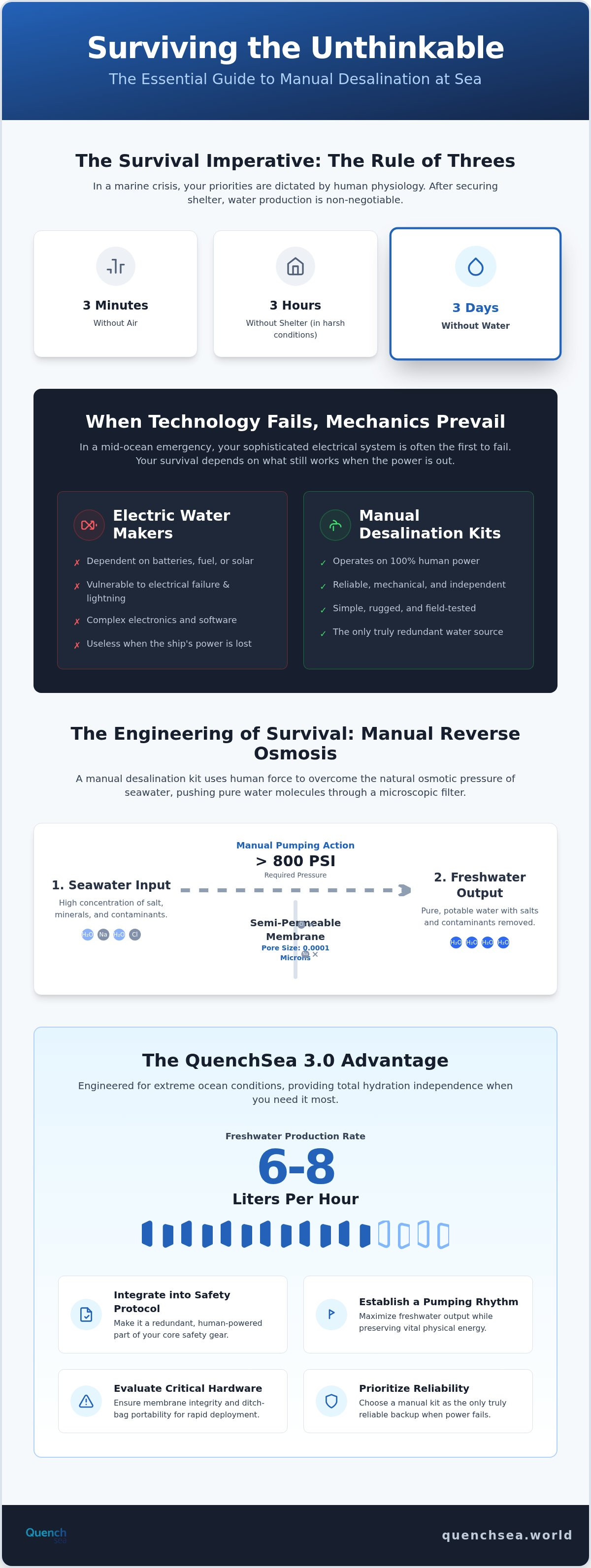
The "Rule of 3s" dictates survival priorities: three minutes without air, three hours without shelter in harsh environments, and three days without water. Once you've secured a raft or shelter, your focus must shift immediately to hydration. You can't wait until you feel thirsty. By then, the physiological decline has already begun. Without a reliable way to produce water, your window for rescue narrows rapidly. Effective survival planning assumes that help won't arrive within the first 72 hours.
Drinking untreated seawater is a fatal mistake. Understanding why is drinking sea water dangerous is essential for every mariner. The high salinity of the ocean forces your kidneys to use more water to flush out the salt than you actually consume. This process, known as osmosis, effectively pulls moisture from your cells. It accelerates dehydration and leads to rapid organ failure. Relying on rationing is a losing strategy. Active production is the only way to sustain life over long durations.
The Limitations of Stored Emergency Water
Stored water is finite and heavy. One liter of water weighs one kilogram. In a life raft or a compact ditch bag, every gram matters. Carrying enough bottled water for a week is often physically impossible due to volume and weight constraints. Additionally, canned or bagged survival water has a fixed shelf life. It can develop a metallic taste or leak over time. Beyond the physical limits, the psychological impact of a dwindling supply is devastating. An emergency desalination kit provides a sense of agency. It transforms a passive wait for rescue into an active survival mission.
Scenarios Requiring Manual Desalination
Critical failures happen without warning. A lightning strike or a flooded engine room can instantly kill a yacht's electrical system, rendering electric water makers useless. In "abandon ship" scenarios, you only have seconds to grab your gear. A portable, manual unit is the only way to ensure a continuous water supply once you leave the primary vessel. Coastal disasters also present risks. Tsunamis or hurricanes can destroy local infrastructure, leaving survivors surrounded by water they can't drink. In these moments, your ability to mechanically filter seawater determines your outcome.
The Engineering of Survival: How Manual Reverse Osmosis Desalinates Seawater
Reverse osmosis (RO) isn't just a filtration process. It's a mechanical victory over thermodynamics. In nature, water naturally moves from areas of low salt concentration to high concentration. To reverse this, you must apply force. An emergency desalination kit utilizes manual pressure to overcome the natural osmotic pressure of seawater, which typically ranges from 800 to 1,000 PSI. By applying mechanical force greater than this pressure, you push pure water molecules through a semi-permeable membrane while leaving salt, minerals, and contaminants behind.
The efficiency of this process depends on the membrane's integrity. These membranes feature microscopic pores approximately 0.0001 microns in size. This is small enough to block sodium and chloride ions, along with bacteria, viruses, and Total Dissolved Solids (TDS). Converting human arm movement into this level of hydraulic pressure requires precise engineering. Every stroke must be maximized to ensure that physical energy isn't wasted. In a survival situation, your calorie expenditure is just as critical as your water intake. Efficient mechanical design ensures you produce the most freshwater with the least amount of effort.
The Mechanical Advantage of Hand-Powered Systems
Hand-powered units rely on leverage and stroke length to manage the high-pressure requirements of desalination. High-quality systems use a long-stroke design to maintain consistent pressure throughout the pumping cycle. This consistency is vital. If the pressure drops below the osmotic threshold during a stroke, the filtration stops. Internal valve structures must be robust and corrosion-resistant to handle the abrasive nature of salt. Using non-electric components eliminates the risk of short circuits or battery failure, making the device a dependable tool in the harshest marine environments. If you're looking for a reliable backup, you can examine the mechanical specs of modern manual units.
Filtration Stages in a Survival Kit
A single membrane isn't enough to handle raw seawater. Ocean water is filled with sediment, plankton, and microplastics that can instantly "blind" or clog a delicate RO membrane. To prevent this, a survival kit employs multiple filtration stages. Primary sediment filters act as the first line of defense, removing visible debris and larger particles. This protects the RO membrane, which serves as the heart of the survival desalination device. Some advanced kits also include post-filtration stages to balance minerals or improve the taste of the permeate. This multi-stage approach ensures the longevity of the hardware and the quality of the life-saving water it produces.
Choosing the Best Emergency Water Maker: Key Features and Kit Components
Selecting an emergency desalination kit requires a cold, technical assessment of hardware specifications. Portability is your first constraint. If a device is too bulky to fit into a standard ditch bag, it stays on the sinking vessel. Every gram matters in a life raft. You need a compact unit that can be deployed in seconds under extreme stress. Beyond size, you must evaluate the device based on its ability to perform when the operator is physically compromised by injury or severe dehydration.
Output capacity is the next critical metric. You must calculate the liters per hour based on your total crew size. While basic survival requires approximately one liter per person daily, high-stress environments increase metabolic water demand. The QuenchSea 3.0 produces 6 to 8 liters of drinking water per hour. This high flow rate allows a single operator to provide enough freshwater for a full crew in a fraction of the day. This efficiency preserves physical energy, which is a finite and precious resource in a survival scenario.
Reliability hinges on field-serviceability. Avoid devices that require specialized tools or complex calibration. In a survival state, your fine motor skills will degrade. The best systems use intuitive, tool-free maintenance protocols. If a pre-filter clogs or a seal requires lubrication, you must be able to address it using only what is contained within the kit. Mechanical simplicity isn't a lack of sophistication; it's the pinnacle of survival engineering.
Material Integrity and Build Quality
Survival hardware must withstand the most corrosive environment on Earth. Impact-resistant, UV-stabilized plastics are often superior to heavy metals that can pit or seize in salt spray. However, internal high-pressure components require precision-machined, corrosion-resistant alloys. Seal quality is paramount. A single failing O-ring can allow brine to contaminate your freshwater output, rendering the device useless. Ensure the kit is rated for the temperature extremes of your route, as membrane performance can vary significantly between arctic and tropical waters.
Essential Accessories for a Complete Kit
A high-performance pump is only effective if the supporting components are equally rugged. Your kit must include the following:
- Intake Hoses: Must feature weighted strainers to keep the line submerged below surface oil and debris.
- Spare Membranes: Essential for long-term deployment where biological fouling might reduce efficiency.
- Collection Vessels: Use only food-grade, collapsible bladders to save space while ensuring water remains uncontaminated.
- Pre-filter Elements: Carry multiple replacements to handle high-turbidity water near coastlines.
Operational Readiness: How to Use and Maintain Your Desalination Device at Sea
Possessing an emergency desalination kit is only the first step. Operational proficiency under duress determines your survival. In a high-stress marine environment, your cognitive abilities will diminish. You must internalize the deployment sequence before a crisis occurs. Start by identifying your intake and discharge lines. Clear communication and methodical movement prevent tangles and accidental overboard loss. Every second saved during setup preserves vital physical energy.
Pumping technique is a matter of endurance, not speed. Don't sprint. Finding a sustainable rhythm is essential to prevent premature exhaustion. Aim for a steady, rhythmic cadence that maintains hydraulic pressure without straining your muscles. Most manual units require a consistent stroke to keep the RO membrane active. If you stop, pressure drops. If you pump too fast, you risk mechanical wear. Efficiency is the goal.
The initial output requires quality control. Always discard the first few liters of permeate. This initial flush clears the system of preservative chemicals and stagnant water trapped in the membrane. Use a TDS meter if your kit includes one, or perform a basic taste test. If the water tastes brackish, continue flushing. Only store water that is confirmed fresh. Reliability is built on these small, disciplined steps. You can order the QuenchSea 3.0 to begin practicing these essential survival drills.
Step-by-Step Deployment in a Life Raft
Operating in a life raft presents unique challenges. Space is limited and the platform is unstable. First, secure the device to a structural point on the raft using a lanyard. This prevents losing your only water source overboard. Position yourself ergonomically to allow for long pumping sessions without back strain. When deploying the intake hose, ensure the strainer is deep enough to avoid surface contaminants. Floating oil, fuel, or debris can permanently damage the RO membrane.
Post-Use Maintenance and Storage
Salt is your hardware's primary enemy. After each use, flush the system with a small amount of freshwater if your reserves allow. This prevents salt crystals from forming inside the valves and on the membrane surface. If the device will be inactive for an extended period, use a preservative solution to inhibit biological growth. Regularly inspect seals and O-rings for signs of wear, cracking, or salt buildup. A well-maintained kit is a dependable kit. Replace worn components immediately to ensure the device is ready for the next emergency.
The QuenchSea 3.0 Advantage: Portable Hydration for Extreme Environments
The QuenchSea 3.0 Desalination Device represents the current standard in emergency hydration hardware. It isn't a leisure gadget. It is a mission-critical tool engineered specifically for the harshest marine environments on the planet. Built with survival-grade materials, the QuenchSea 3.0 withstands relentless UV exposure, corrosive salt spray, and the physical impacts common in a tossing life raft. This emergency desalination kit provides a bridge between disaster and rescue, offering a reliable freshwater source when all other shipboard systems have failed.
Design matters most when you're at your weakest. The QuenchSea 3.0 features an optimized lever system that allows for efficient operation even in high-stress scenarios. This is a vital feature for survivors who may be managing hypothermia or physical exhaustion. Every mechanical component has been refined to maximize hydraulic output while minimizing physical strain. This focus on user-centric engineering reflects a deep understanding of survival psychology and human physiology under stress. It is a tool developed for global impact, ensuring that clean water is accessible regardless of power availability.
Why QuenchSea 3.0 is the Choice for Marine Professionals
Professional mariners, military personnel, and humanitarian relief sectors prioritize performance over fluff. The QuenchSea 3.0 has earned its place in these sectors through proven reliability in field conditions. Its compact footprint makes it the ultimate addition to any life raft water supply. Unlike complex electric systems that require constant maintenance and a stable power grid, this device offers cost-effective redundancy. It is the insurance policy you hope to never use but cannot afford to be without. When the primary water maker fails, this manual system becomes your most valuable asset.
Final Checklist: Preparing Your Coastal Survival Strategy
Preparedness is a continuous process. Simply owning the hardware isn't enough. You must integrate the QuenchSea into your standard ditch bag and ensure it is easily accessible in total darkness or heavy seas. Conduct regular training drills with your crew. Every member should know how to deploy the hoses and maintain a steady pumping rhythm. By securing your freshwater future with a manual water maker for boat backup, you eliminate the fear of dehydration. You transform from a passive victim of circumstances into a prepared, self-reliant survivor who is ready for the long haul.
Future-Proof Your Marine Survival Strategy
Survival is a matter of preparation and hardware reliability. You've seen why relying on electric systems during a crisis is a calculated risk you don't need to take. A manual emergency desalination kit provides the only true fail-safe against total power failure. By mastering the rhythm of manual reverse osmosis, you ensure that hydration is never dependent on a battery or a fuel tank. You've moved from vulnerability to self-reliance through mechanical simplicity.
The QuenchSea 3.0 is a lightweight, compact solution designed for the harsh reality of life rafts. It's built for those who prioritize mechanical integrity over complexity. Trusted by defense and humanitarian agencies worldwide, this device requires no batteries or fuel to operate. It provides a consistent freshwater output of 6 to 8 liters per hour, making it the ultimate redundant system for any offshore vessel.
Don't wait for a crisis to secure your water source. Secure your survival with the QuenchSea 3.0 today. You've already gained the technical knowledge required to survive. Now, equip yourself with the hardware to ensure you always have a freshwater future. Safe travels on the open water.
Frequently Asked Questions
Can an emergency desalination kit remove all salt from seawater?
An emergency desalination kit removes approximately 98% of salts, minerals, and contaminants from raw seawater. The reverse osmosis membrane features microscopic pores small enough to block sodium and chloride ions while allowing pure water molecules to pass through. While no mechanical system is 100% efficient, the resulting permeate meets international safety standards for drinking water. This process effectively converts lethal brine into life-saving hydration during offshore emergencies.
How much water can a manual desalination device produce per hour?
Production rates depend on the specific hardware and the operator's physical effort. The QuenchSea 3.0 is engineered to produce 6 to 8 liters of freshwater per hour under standard marine conditions. This high output ensures that a single person can generate enough water for a full crew without reaching the point of physical exhaustion. Maintaining a consistent pumping rhythm is the most important factor for achieving these flow rates.
Is it difficult to pump a hand-operated water maker for long periods?
Pumping requires consistent physical effort, but modern units utilize mechanical leverage to minimize fatigue. The engineering focuses on ergonomic stroke lengths that allow survivors to maintain a sustainable, rhythmic cadence. While it is more demanding than turning a tap, the energy expenditure is calculated to be lower than the hydration benefit gained. Using a two-handed technique or alternating operators ensures continuous production during extended survival scenarios.
Does a manual desalination kit require chemicals or electricity?
No, a manual emergency desalination kit operates purely on mechanical pressure. It requires zero batteries, fuel, or solar power to function. This total independence makes it a superior backup for offshore vessels where electrical failure is a primary risk. The system relies on physical force to overcome osmotic pressure, ensuring you can produce freshwater even if your ship’s power grid and engine are completely offline.
How long does the RO membrane last in an emergency water maker?
RO membranes typically last for several hundred hours of operation or thousands of liters if maintained correctly. Biological fouling and sediment buildup are the primary factors that reduce membrane lifespan. Using pre-filters and flushing the system with freshwater after use significantly extends the component's viability. In a survival situation, a single membrane is designed to provide weeks of continuous life-support for a standard crew size.
Can I use an emergency desalination kit on brackish water or just seawater?
You can use these kits on both seawater and brackish water. Brackish water actually requires less mechanical pressure to desalinate because it has a lower salt concentration than the open ocean. This results in less physical strain on the operator and potentially higher flow rates. However, never use the device on water contaminated with petroleum or chemicals, as oils can permanently damage the sensitive reverse osmosis membrane.
Is the water produced by a manual RO device safe for children and the elderly?
Yes, the water produced is safe for all age groups. Reverse osmosis technology filters out salt as well as bacteria, viruses, and microplastics. This level of purification ensures that the water is biologically safe for vulnerable individuals, including children and the elderly. It provides a reliable alternative to contaminated coastal water or stagnant reserves that may have exceeded their safe shelf life during a disaster.
What happens if the RO membrane gets clogged during a survival situation?
If the membrane clogs, the freshwater output will drop significantly or stop entirely. This is why using a multi-stage pre-filtration system is non-negotiable for marine survival. Pre-filters remove sediment and plankton before they reach the delicate RO membrane. Most survival kits include spare pre-filter elements to address this issue in the field. Maintaining the integrity of the primary membrane is your highest priority for long-term hydration.