

What if the nearest source of water is seawater, and there’s no power to run a pump? A portable freshwater maker can help, but not every filter or purifier can remove salt. Choose by starting with your water source, then compare the device’s power needs, operating effort, documented output, and maintenance requirements with the conditions you expect.
It’s reasonable to ask whether a compact device can deliver when you’re far from infrastructure. The treatment method matters: reverse osmosis uses pressure to push water through a membrane, while many filters target other contaminants. A hand-powered option like QuenchSea 3.0 is designed for seawater and works without electricity, batteries, or fuel. It isn’t a universal solution for every water source.
This guide explains how portable freshwater makers work, compares the main approaches, and lists what to check before relying on one. You’ll learn how to match a device to your water source, weigh manual effort against usable output, and prepare for real operating conditions. The goal is to choose equipment that fits your mission, not just your gear list.
Key Takeaways
- Match the device to the source: desalination removes salt, while filters and purifiers target different water concerns.
- Compare portable freshwater maker options by power needs, user effort, portability, and usable output for your situation.
- Before relying on a device, check its instructions, water-quality claims, operating demands, and maintenance requirements.
- QuenchSea 3.0 is a seawater-focused option to consider when manual operation suits your preparedness plan.
What Is a Portable Freshwater Maker, and What Can It Treat?
A portable freshwater maker produces freshwater from a specified source. The word specified matters: a device designed to desalinate seawater isn’t automatically suitable for brackish water, freshwater, or water contaminated with chemicals or microbes. Check the manufacturer’s stated source-water limits before use. Don’t assume one device treats every possible hazard.
Desalination removes dissolved salts from salty water. Filtration usually captures particles or targets particular substances, while water purification is a broader term for methods that reduce different types of contaminants. Reverse-osmosis desalination uses pressure to push water through a semipermeable membrane, separating much of the salt and other dissolved material from the water that passes through.
How Is a Freshwater Maker Different from a Water Filter?
Ordinary filters don’t necessarily remove dissolved salts from seawater. Dissolved solids, such as salts and minerals, are dispersed in water, so they can’t simply be caught like visible sand or debris. Some filters address particles; other treatment methods target specific contaminants. The Portable water purification overview explains how approaches such as filtration, chemical disinfection, and UV treatment serve different purposes.
Use the device’s documented claims as your guide. Confirm which source water it’s designed for and what it’s intended to reduce. Don’t treat a seawater desalination device as a universal purifier, or assume a filter intended for freshwater makes seawater drinkable.
Who Uses Portable Seawater Desalination Devices?
Portable seawater desalination devices can be relevant to marine safety, life rafts, yachts, emergency preparedness, and off-grid coastal use. In these settings, seawater may be available when electricity or fuel isn’t. A hand-powered option such as QuenchSea 3.0 uses manual pressure and reverse osmosis to desalinate seawater without electricity, batteries, or fuel.
The intended use shapes what “reliable” means. A device packed for a life raft needs to fit the available space and be usable under pressure. For a yacht or coastal camp, weigh portability against the ongoing manual effort and the amount of water needed. In every case, plan around the device’s stated output and operating requirements, and consider what you’ll do if it can’t be used.
For a closer look at evaluating a specific seawater device, read the portable desalination device buyer’s guide.
How Portable Reverse-Osmosis Freshwater Makers Work
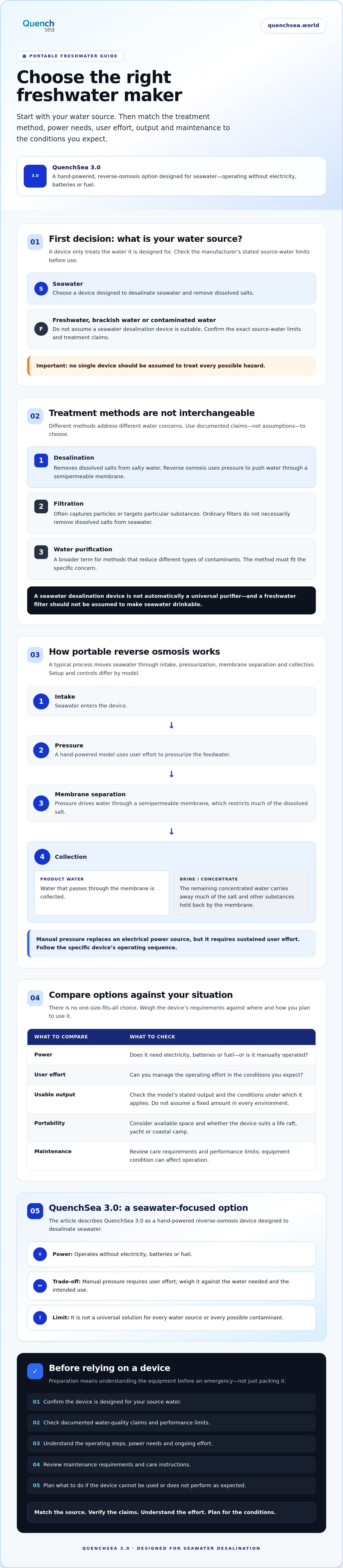
A portable reverse-osmosis freshwater maker moves seawater through intake, pressurization, membrane separation, and collection. Controls and setup differ by model, so follow the device’s operating instructions rather than assuming every unit works the same way.
At the center is a semipermeable membrane, a barrier that allows water molecules to pass while restricting much of the dissolved salt. Pressure drives the separation. The process of desalination therefore differs from basic filtration, which may catch particles but doesn’t necessarily separate dissolved salt from water.
What Happens Inside a Manual Reverse-Osmosis Device?
First, an intake draws seawater into the device. In a hand-powered model, the user operates a pump or another pressure mechanism to push the feedwater toward the membrane. Water that passes through is collected as product water. The remaining concentrated water, called brine or concentrate, carries away much of the salt and other substances held back by the membrane.
Manual pressure replaces an electrical power source, but it requires sustained user effort. Follow the specified setup and operating sequence. Don’t assume the intake, pumping rhythm, or collection method is interchangeable across devices.
What Affects Freshwater Production and Water Quality?
Production and resulting water quality depend on more than the membrane alone. Source-water conditions, correct operation, and equipment condition can all affect performance. Water outside the device’s stated limits or a membrane that hasn’t been maintained as instructed may affect how it operates. Check the manufacturer’s guidance for suitable source water, maintenance, and performance limits.
A stated output is meaningful only under the conditions specified for that model. Don’t assume a device will produce a fixed amount in every environment, or that desalination removes every possible contaminant. Verify model-specific water-quality claims and follow applicable water-safety guidance before relying on collected water for drinking.
For preparedness, read the official instructions before an emergency. Understand the operating steps, maintenance requirements, and what to do if the device doesn’t perform as expected. If you’re assessing a hand-powered option for seawater, review the QuenchSea 3.0 desalination device details alongside its official instructions to confirm that the intended use and operating requirements fit your plan.
Portable Freshwater Maker Options: Compare Power, Effort, and Use
A portable freshwater maker should match both the water source and the conditions where you’ll operate it. Compare treatment method, power supply, user effort, and intended role before deciding. A filter isn’t a substitute for desalination unless its specifications explicitly confirm it removes salt from seawater.
| Option | Source water | Power requirement | User effort | Portability | Intended role |
|---|---|---|---|---|---|
| Manual reverse osmosis | Seawater, if specified | Hand-powered | Ongoing physical effort | Designed to be carried, with size varying by model | Off-grid, marine, or emergency backup |
| Powered desalination | Seawater, if specified | Electrical power or fuel, depending on design | Less manual pumping, but requires power setup and operation | Varies by system | Use where the required power source is available |
| Non-desalination filter | Source water listed by its manufacturer | Often manual, but design varies | Varies by method and use | Ranges from compact to larger setups | Targets specified particles or contaminants, not salt unless confirmed |
Manual Versus Powered Desalination
Manual desalination avoids reliance on an electrical supply or fuel, which can matter aboard a life raft or in a remote coastal location. The trade-off is physical work. A powered system can reduce pumping effort, but only if its power source is available and practical to carry or maintain. Compare output, operating endurance, and effort using the specific manufacturers’ documentation. Research into membrane design continues, including advances in reverse osmosis technology, but research findings don’t establish the performance of a particular device.
Portable Device Versus Fixed Marine Water Maker
A portable unit can serve as an independent backup or suit a small craft where space and installation options are limited. A fixed marine water maker is installed aboard and may better suit a vessel that needs a built-in system, but installation and vessel setup become part of the decision. Consider boat size, trip duration, available power, storage, and whether the device is a primary supply or backup. Check installation requirements and performance claims for the specific system. For vessel-focused factors, see this manual boat water maker comparison.
There’s no universal best choice. If hand-powered seawater desalination fits your backup plan, review the QuenchSea 3.0 desalination device and compare its stated requirements with your mission.
How to Choose and Prepare a Portable Freshwater Maker
A portable freshwater maker is useful only if its source-water limits, operating demands, and output fit your plan. Portable production won’t automatically meet every user’s needs. Estimate what the device must do, then check the manufacturer’s claims and instructions before relying on it.
Match the Device to Your Mission and Water Source
Use this checklist to narrow your options:
- Define the use. A life-raft backup, yacht supply, coastal off-grid setup, and emergency-response kit have different space, access, and readiness needs. Decide whether the device is a backup or part of your planned water supply.
- Identify the source. Confirm that the device is designed for the water available in that scenario. Don’t assume a seawater desalination unit treats freshwater, brackish water, or other contaminated sources.
- Assess power and effort. Check whether the device needs electricity, batteries, or fuel. For hand-powered equipment, consider who will operate it and whether the required physical effort is practical in expected conditions.
- Check output needs. Consider the number of users, how the device will be used, and how much water you’ll need for that role. Compare those needs with the manufacturer’s stated output under specified conditions. Don’t treat a published figure as a guarantee for every setting.
Then verify the operating instructions, water-quality claims, performance limits, and maintenance requirements. These details help you decide whether the device fits the mission, not just whether it fits in your kit.
Check Operating Readiness Before You Need It
Preparation turns equipment into a usable plan. Follow the manufacturer’s guidance for inspection, maintenance, storage, and operation. Practice the sequence in safe conditions so you know how to set up the device and collect water before an emergency puts you under pressure.
- Inspect: Check the device and any required components as directed in its instructions.
- Practice: Learn the operating steps and assess the effort required.
- Store: Follow the specified storage and maintenance guidance.
- Plan backup: Pair production equipment with suitable backup water supplies and a broader water plan.
For a seawater-focused, hand-powered option, review the QuenchSea 3.0 desalination device and check its official documentation against your source water, output needs, and operating plan before choosing it.
QuenchSea 3.0: A Hand-Powered Option for Seawater
QuenchSea 3.0 is a portable, hand-powered reverse-osmosis device designed to desalinate seawater. It uses manual pressure to move water through a membrane and operates without electricity, batteries, or fuel. That power approach can suit situations where those energy sources aren’t available. Its intended applications include marine safety, emergency preparedness, disaster relief, defence, and off-grid coastal use.
It’s a seawater-focused tool, not a universal water purifier. Before selecting it, compare its documented capabilities with your source water, intended role, expected user effort, and output requirements. A suitable match depends on your mission and the official specifications, not portability alone.
Where Does a Hand-Powered Seawater Device Fit?
A manual device may suit a yacht, marine safety kit, life raft, or coastal emergency plan where grid power or fuel could be unavailable. The trade-off is that operation requires human effort, so consider who will use it and whether that effort is practical in the conditions you expect. Decide, too, whether the device serves as a backup or part of a broader water plan.
A portable maker is a planned tool, not a replacement for every water-supply measure. Account for the number of people relying on it, the water source available, and how you’ll manage if conditions prevent operation. For additional emergency-planning context, read this survival desalination device guide.
What to Verify Before Selecting QuenchSea 3.0
Check the current official product information before making a decision. Confirm the intended source water and review the documented output, operating steps, maintenance needs, performance limits, and water-quality guidance. These details help you judge whether the device fits your use case. Don’t assume a stated capability applies in every operating condition, or that desalination addresses contaminants beyond the product’s claims.
Preparedness also means knowing how to use and maintain the device before you need it. Read the instructions, consider the manual effort, and include backup water in your plan. For emergency use, yacht equipment, or off-grid coastal readiness, weigh those practical requirements alongside the device’s role as a hand-powered seawater option.
To assess the fit for your needs, explore QuenchSea 3.0 product information and review its official documentation.
Choose for the Conditions You’ll Face
A reliable portable freshwater maker starts with a clear match. Identify your water source, distinguish salt removal from ordinary filtration, and compare the device’s power needs, operating effort, and documented output with your plan. Read the operating and maintenance instructions before relying on any unit. Practice in safe conditions, and include backup water in your preparedness plan.
For seawater use where electricity, batteries, or fuel may not be available, QuenchSea 3.0 uses hand-powered reverse osmosis to desalinate seawater. It’s a seawater-focused option, so check its official specifications and water-quality guidance against your intended use rather than assuming it suits every source or need.
Explore QuenchSea 3.0 and review its official specifications to see whether its documented capabilities fit your mission. A considered choice and a practiced plan can help you prepare with greater confidence.
Frequently Asked Questions
What is a portable freshwater maker?
A portable freshwater maker produces freshwater from a specified source, such as seawater. Some models desalinate by removing dissolved salts; others filter or treat water without removing salt. These functions aren’t interchangeable. Before choosing a device or drinking its output, check the manufacturer’s stated source-water limits, treatment process, and water-quality guidance. A device designed for seawater may not be suitable for freshwater, brackish water, or water with other contaminants.
Can a portable water filter make seawater safe to drink?
Not necessarily. Many portable filters target particles or certain contaminants but don’t remove dissolved salts. Seawater needs a desalination process designed to reduce salt content, such as reverse osmosis. Read the product specifications carefully, and don’t rely on clear-looking water as proof that it’s safe. Terms like “purifier” or “filter” don’t confirm seawater desalination unless the manufacturer specifically states that the device is designed to remove salt.
How does a hand-powered freshwater maker work?
A hand-powered reverse-osmosis device uses human effort to create pressure, pushing seawater through a semipermeable membrane. The membrane allows water to pass while separating much of the salt, producing a freshwater stream and a more concentrated brine stream. Operating steps, physical effort, output, and water-quality limits vary by device. Follow its instructions and verify performance claims against current official documentation before relying on the device in an emergency.
Does a portable freshwater maker need electricity or fuel?
It depends on the design. Some desalination systems need electrical power or fuel, while manual models can operate without either. For example, QuenchSea 3.0 uses hand-powered reverse osmosis to desalinate seawater without electricity, batteries, or fuel. Manual operation still requires physical effort and correct use. Compare a device’s stated power requirements and operating guidance with the conditions where you’ll use it, then check verified output before including it in an emergency plan.
How much freshwater can a portable desalination device produce?
Output varies by model, operating conditions, source water, and how the manufacturer measures production. Don’t use a generic category estimate to plan water needs for a crew or emergency. Check the exact device’s current official specifications and instructions, including any conditions attached to its output claim. Decide whether that documented production fits the device’s intended role, and pair it with a suitable backup water plan rather than relying on one unit alone.
Is water from a portable desalination device automatically safe to drink?
No. Don’t assume every device or operating condition produces water that’s safe to drink. Follow the manufacturer’s guidance on suitable source water, operation, maintenance, and water-quality verification. Desalination reduces salt, but that alone doesn’t establish that every possible contaminant has been addressed. Use claims supported by current product documentation and follow applicable expert water-safety guidance. If conditions fall outside the device’s stated limits, don’t assume its output is suitable for drinking.
What should I check before storing a portable freshwater maker for emergencies?
Follow the manufacturer’s instructions for inspection, cleaning, maintenance, and storage. Confirm that the device is complete, accessible, and designed for the water source you expect to encounter. Practice the operating sequence in safe conditions before an emergency, and consider who may need to use it and how much effort operation requires. Plan for realistic output needs, include backup water, and review official guidance periodically for updated instructions or limits.