

What good is a high-output watermaker if it stays with the ship? In an emergency, an expedition cruise lifeboat watermaker must suit conditions after evacuation, not just the vessel’s normal operations. An installed system can produce water while onboard power is available, but that capability may not follow the crew into a lifeboat.
It’s reasonable to compare output first. Yet power independence, stowage, access, and ease of operation can matter just as much under pressure. The right choice depends on the device’s role in a broader emergency water plan, not production capacity alone.
This guide compares installed and portable options by power source, deployment, and emergency use. It also explains how a compact, hand-powered reverse-osmosis device such as QuenchSea 3.0 can support preparedness: it desalinated seawater without electricity, batteries, or fuel. Use these practical criteria to assess what could remain useful after abandoning ship and what needs to be within reach in a lifeboat.
Key Takeaways
- Set the emergency water mission before comparing equipment: routine onboard production and post-abandonment watermaking serve different needs.
- Assess an expedition cruise lifeboat watermaker by power independence, portability, operation, storage, and its intended emergency role.
- Compare powered vessel systems with manual devices based on where they can operate and whether they remain useful after evacuation.
- Plan placement, access, crew familiarization, and procedural integration so equipment can be used under pressure.
- QuenchSea 3.0 uses hand-powered reverse osmosis to desalinate seawater without electricity, batteries, or fuel, as one element of layered preparedness.
Expedition cruise lifeboat watermakers: define the emergency water mission
A lifeboat watermaker converts seawater into freshwater when an emergency disrupts normal water access. The term covers different equipment: an installed marine watermaker supports onboard production, while a portable lifeboat option is intended to be carried and used after leaving the vessel. Both rely on desalination, the process of separating dissolved salts from seawater. This overview of the desalination process explains the main methods, including reverse osmosis.
These systems serve different missions. An installed unit may produce freshwater for routine use while the vessel’s power and equipment remain available. After abandonment, the crew may no longer have access to those systems, their power supply, or the fuel that supports them. A raft also has limited room and can be difficult to work in, so an emergency device needs to suit the conditions in which it may actually be used.
Preparedness works in layers: stored drinking water provides an immediate supply, other emergency equipment supports survival, and a production device may help make additional water from seawater. Plan a watermaker as one part of that system, not as a substitute for every other water provision.
What changes when the crew leaves the expedition vessel?
Abandoning ship changes what’s within reach. Vessel-mounted machinery may remain behind, and electrical power or fuel may no longer be available to operate it. The crew must rely on supplies and equipment carried into the survival craft. Space, movement, weather, and fatigue can all affect whether a device is accessible and practical to use.
Don’t assume every expedition cruise lifeboat has the same layout, equipment, or procedures. The vessel’s emergency plan determines what the crew can use and how. High production capacity alone doesn’t establish whether a watermaker fits the lifeboat mission.
What job should an emergency watermaker perform?
Define the job before choosing equipment. Consider an emergency watermaker backup production within a wider water plan, rather than the sole source of drinking water. Its intended role depends on factors such as the number of people, expected time in the survival craft, available stowage, and the procedures people will follow to operate it.
That context makes an expedition cruise lifeboat watermaker easier to assess. The key question is whether it can support the planned emergency role when normal vessel systems are unavailable. For a closer look at how stored supplies fit into preparedness, read this life raft water supply guide.
How to evaluate an expedition cruise lifeboat watermaker
Assess the device for the environment it must serve, not just the water it can produce aboard a vessel. A practical checklist covers five points: energy independence, portability, operating method, stowage and access, and intended emergency role. Together, these help determine whether the equipment is useful after separation from the ship.
Power independence, portability, and access
Start with the power source. AC- or DC-powered units, generators, and engine-driven systems can support routine production while their power supply is available. In a lifeboat, that supply may be inaccessible. A hand-powered device avoids dependence on vessel electricity, batteries, or fuel, but still requires people to operate it.
Next, assess deployment within the actual survival-craft plan. Can the device be stowed with equipment that must travel, reached without shifting critical supplies, and set up in the space available? Could the crew identify and use it under pressure? A portable label alone doesn’t answer these questions. The operating method determines the preparation and hands-on effort required.
The U.S. Coast Guard lifeboat equipment standards provide a regulatory reference that includes a manually powered reverse-osmosis desalinator among specified equipment options. That reference is not, by itself, evidence that a particular device meets the requirements for every vessel or jurisdiction.
Output, crew needs, and intended use
Compare production information only when it’s verified, then interpret it against the vessel’s documented emergency-planning assumptions. Consider the number of people, expected duration, stored water, device access, and the crew’s ability to operate the equipment. A headline output figure doesn’t show how well the device fits those conditions.
Output is only one factor in emergency-water planning; power independence, access, and the device’s role matter too. Treat a watermaker as one layer of preparedness, not a promise that a single device will supply every person’s full needs in every scenario.
- Energy: Identify the power sources the device depends on.
- Deployment: Account for stowage, access, setup, and operating effort.
- Planning fit: Compare verified production details with the crew’s emergency assumptions.
- Role: Decide how the device complements stored water and other supplies.
For product-specific context on a portable, hand-powered option, explore the QuenchSea 3.0 buyer’s guide. QuenchSea 3.0 is designed to desalinate seawater without electricity, batteries, or fuel. It can serve as one component of a broader lifeboat water plan.
Manual lifeboat watermakers versus powered yacht systems
Powered marine watermakers and manual emergency devices solve different problems. An installed unit can produce freshwater during normal vessel operations, while a portable manual unit is designed to remain usable without the ship’s power supply. For an expedition cruise lifeboat watermaker, independence and deployment may matter more than maximum output.
| Factor | Powered yacht system | Hand-powered emergency device |
|---|---|---|
| Power source | AC, DC, generator, or engine-dependent | Human effort; no vessel electricity, batteries, or fuel required |
| Typical setting | Installed aboard a vessel | Portable use in a survival or emergency setting |
| Deployment | Connected to vessel systems | Stowed for access and manual operation |
| Emergency role | Routine onboard freshwater production while systems are available | Supplemental freshwater production when powered equipment may be unavailable |
Where powered marine watermakers fit
AC, DC, generator-powered, and engine-dependent systems can support ongoing freshwater production aboard a vessel. Their higher output can suit routine demand, but that capacity depends on the system being accessible and its power source operating. After abandoning ship, a vessel-mounted unit may not be available to people in a raft. High output onboard doesn’t automatically solve a raft-level contingency.
Where hand-powered reverse osmosis fits
A manual reverse-osmosis device uses human effort to create the pressure needed for desalination, rather than relying on electricity, batteries, or fuel. QuenchSea 3.0 is a portable, hand-powered option designed for marine safety and emergency preparedness. It serves a different role from a routine, high-volume yacht system: a potential backup within a wider water plan.
Neither approach is universally better. A powered unit supports vessel-based production; a manual device offers power-independent operation in an emergency. Start the comparison with where the water must be made and which systems will remain available. The International Convention for the Safety of Life at Sea (SOLAS) provides the international maritime safety framework, while the equipment and procedures applicable to a specific vessel depend on its requirements.
For a closer comparison of non-electric options, see this manual boat water maker comparison. Match the equipment to its intended setting rather than selecting by output alone.
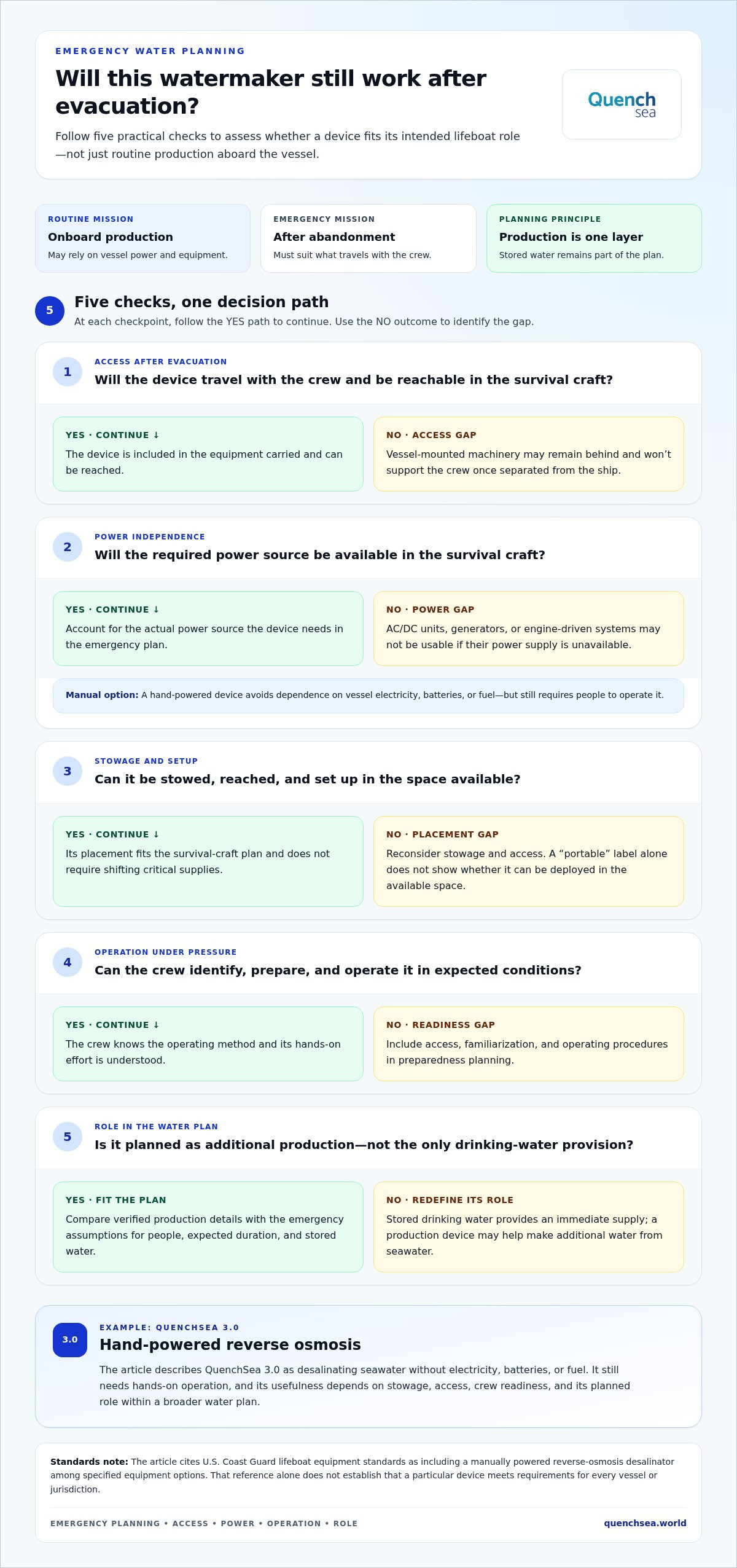
Prepare an expedition cruise lifeboat watermaker for real deployment
A watermaker supports emergency readiness only if the crew can find it, access it, and understand its role. Prepare the device within the vessel’s safety plan, approved stowage arrangements, and applicable requirements. Follow the manufacturer’s instructions for model-specific operation and maintenance.
Stowage, access, and crew familiarization
Choose protected storage within the vessel’s approved arrangements, while keeping the device reachable without displacing other critical equipment. Identify its location clearly and ensure the intended users know where it is. Familiarize them with the device before an emergency so they understand its basic role. Stowed emergency equipment must remain accessible and familiar to the people expected to use it.
Integrating a watermaker into the wider water plan
Stored water, rationing procedures, and water production are complementary measures. A desalination device can support the plan, but it doesn’t replace required equipment or vessel-specific procedures. Align its intended use with the crew, available storage, emergency-duration assumptions, and the wider survival-craft plan. For more context on supplies and planning, read this emergency drinking water at sea guide.
Use this readiness sequence to make an expedition cruise lifeboat watermaker a practical part of preparedness:
- Confirm placement. Put the device in the planned location, consistent with approved arrangements and access to other emergency equipment.
- Check access. Make sure intended users can locate and retrieve it without avoidable delays.
- Build familiarity. Show the relevant crew where it is and review its intended role before an emergency.
- Integrate procedures. Include the device in the vessel’s water plan, clarifying how it complements stored supplies and rationing guidance.
- Follow the manufacturer’s instructions. Use the device-specific directions for operation, inspection, and maintenance.
Keep the procedure clear enough to use under pressure. It should identify where the device is stored, who is familiar with it, and how its use fits the wider plan. Avoid assuming one arrangement suits every vessel; crew roles, survival-craft layouts, and operating procedures vary.
For a portable, hand-powered option designed for marine safety and emergency use, explore QuenchSea 3.0 for emergency water preparedness.
QuenchSea 3.0 as a portable expedition cruise lifeboat watermaker option
QuenchSea 3.0 is a portable, hand-powered reverse-osmosis device that desalinates seawater into drinking water. Its emergency value is straightforward: it operates without electricity, batteries, or fuel. If the vessel’s normal power systems are unavailable or unsuitable, water production doesn’t depend on them.
What the QuenchSea 3.0 brings to emergency planning
Manual operation makes QuenchSea 3.0 relevant to marine safety, life raft, and emergency-preparedness planning. Rather than relying on an installed system that remains with the vessel, it offers a portable option intended for emergency use. The crew uses hand power to drive the reverse-osmosis process, making the device a potential layer of support while stored water is being managed.
That role has limits. A manual device requires people to operate it, and it shouldn’t be treated as a guaranteed supply for every person or emergency duration. Assess its fit alongside stored water, crew size, access, stowage, and the vessel’s procedures. Follow the manufacturer’s instructions for device-specific use and care.
Decide whether a manual backup fits the mission
QuenchSea 3.0 is best considered an emergency watermaking option within a broader preparedness plan, not a routine high-volume yacht system or a replacement for required equipment. The central question is whether a portable, manually operated desalination device suits the vessel’s planned emergency role and can be accessed and used as intended.
Keep the vessel’s safety plan and applicable requirements in place. A watermaker can complement stored supplies and established procedures, but it doesn’t determine the full water plan on its own. The right fit depends on how the device is stowed, who is familiar with it, and how its use aligns with the crew’s emergency assumptions.
For expedition operators and crews seeking an expedition cruise lifeboat watermaker option that doesn’t rely on onboard power, QuenchSea 3.0 offers hand-powered seawater desalination as one part of layered preparedness. Explore the QuenchSea 3.0 desalination device.
Build water resilience into your expedition plan
The right expedition cruise lifeboat watermaker is suited to its emergency role, not simply the one with the highest output. Powered systems support freshwater production aboard the vessel; portable manual devices provide another option if vessel power is unavailable. Compare equipment by independence, practical access, operating method, and fit with the crew’s safety plan.
Preparedness also depends on layers. Stored water, clear procedures, accessible equipment, and crew familiarization all matter. A watermaker can support that plan, but it shouldn’t be treated as a guaranteed supply or replacement for required equipment.
QuenchSea 3.0 uses hand-powered reverse osmosis to convert seawater into freshwater without electricity, batteries, or fuel. Designed for marine safety, life rafts, and emergency preparedness, it offers a portable option to consider within a wider water plan.
Explore the QuenchSea 3.0 desalination device and take a practical next step toward more informed emergency planning. Preparedness starts with equipment your crew can locate, understand, and use.
Frequently Asked Questions
What is an expedition cruise lifeboat watermaker?
An expedition cruise lifeboat watermaker is equipment designed to turn seawater into freshwater for emergency use. Unlike an installed marine system intended for routine onboard production, a portable lifeboat option is planned for use in a survival craft. It may supplement stored water if vessel systems are unavailable. Its suitability depends on practical factors such as stowage, access, operating method, crew familiarization, and its place in the vessel’s emergency water plan.
Can a lifeboat watermaker work without electricity?
Yes, a hand-powered watermaker can desalinate seawater without electricity. QuenchSea 3.0 uses manual pressure and reverse osmosis, so it doesn’t require electricity, batteries, or fuel. Powered marine units, by contrast, depend on their specified power source, such as AC, DC, a generator, or engine power. Check the device’s operating instructions and plan how it will be accessed and used if the vessel’s normal power systems aren’t available.
How much water can a lifeboat watermaker produce?
Production varies by device, so use verified manufacturer information for the specific model rather than assuming all watermakers deliver the same volume. Then consider how the stated production fits the crew size, operating effort, expected emergency duration, and other available supplies. Output alone can’t establish whether a device will meet a lifeboat’s needs. Treat water production as one layer of preparedness, alongside stored water and the vessel’s emergency procedures.
Is a manual watermaker better than a powered marine watermaker for a lifeboat?
Neither type is universally better; each serves a different setting. A powered system can support routine freshwater production aboard a vessel while its power supply is available. A manual device can provide an option independent of electricity, batteries, or fuel, which may suit a lifeboat emergency. Compare the system’s intended role, portability, access, operating demands, and verified production details against the vessel’s safety plan.
Can a portable watermaker replace stored water in a lifeboat?
No. A portable watermaker should complement stored water, not replace it. Production depends on the device being accessible, usable, and operated according to its instructions, while stored supplies provide water already on hand. Plan these resources together with rationing procedures and other required equipment. A desalination device is one part of layered preparedness, not a guarantee that every person’s full water needs will be met in every emergency.
Does reverse osmosis make seawater drinkable?
Reverse osmosis can desalinate seawater by forcing it through a membrane that separates much of the dissolved salt from the water. A device designed for seawater desalination can produce freshwater for drinking when used as directed. Follow the manufacturer’s instructions for operation and water handling. Don’t confuse ordinary filters with desalination devices: standard filters aren’t designed to remove dissolved salts from seawater.
What should buyers check before stowing a watermaker in a lifeboat?
Check that the device fits the vessel’s approved stowage arrangements and remains protected, identifiable, and accessible without obstructing other equipment. Confirm who is expected to use it and ensure those people are familiar with its purpose and the manufacturer’s instructions. Include its role in the vessel’s safety plan, alongside stored water and emergency procedures. Assess applicable requirements for the specific vessel rather than assuming one arrangement applies to every lifeboat.