

A marina berth doesn’t guarantee suitable intake water. Manual watermakers can make freshwater without onboard electricity, but output is limited: one estimate puts the effort at four hours of pumping a day to produce one gallon of drinking water. If you’re deciding whether to buy a manual watermaker for a boat, assess the water source and the effort required before treating it as a daily supply.
A compact, hand-powered watermaker can provide useful backup freshwater, but it requires regular effort and produces less than a powered yacht system. This guide explains how reverse osmosis works, what affects output, how to assess a manual unit for boat use, and what to compare before buying. It also covers practical setup and maintenance considerations so you can decide whether a manual watermaker suits your boat and its water plan.
Key Takeaways
- Plan membrane and pre-filter care around operating conditions: pre-filters generally need replacement every 2 to 6 months or approximately 100-150 hours of use.
- Compare manual, low-power, and powered watermakers by their energy needs, freshwater output, and role aboard your boat.
- Assess marina or harbor intake water before operating a watermaker; the source water affects whether it’s suitable for reverse osmosis.
- Evaluate purchase cost by system type, components, and intended use, rather than relying on a price that may not fit your setup.
- QuenchSea 3.0 is a hand-powered desalination device that uses reverse osmosis to make drinking water from seawater without electricity, batteries, or fuel.
RO membrane lifespan and pre-filter replacement
Membrane care affects freshwater output and the service life of a marine reverse-osmosis system. Track operating hours, pre-filter changes, flushing, and storage in a maintenance log.
RO Membrane Lifespan
Marine RO membranes should last 5 to 7 years with proper maintenance and saltwater flushing. Rainman says reverse-osmosis membranes should be changed after 5-10 years. These estimates reflect different guidance, so use the watermaker manufacturer’s replacement criteria for its membrane. Note the installation date, operating hours, and gallons produced. A change in output or performance also gives you a reason to inspect the system and its maintenance history.
Pre-filters protect the membrane by catching suspended material before seawater reaches it. Marine watermaker pre-filters generally need replacement every 2 to 6 months, or after approximately 100-150 hours of use. Record both calendar time and run time. In silty water, a filter can load faster, restricting feedwater and adding strain to the pump. Replace the filter using the specified type and follow the maker’s installation steps.
Keep pump maintenance separate from membrane care. During routine checks, inspect the pump, hoses, and connections for leaks or wear, and follow the manufacturer’s schedule for pump oil where applicable. An inverter supplies power to electrical equipment, but it does not replace pump inspections or filter changes. Record service dates, replaced parts, and any change in freshwater output to spot gradual performance shifts.
Membrane Protection and Storage
After operating a marine watermaker, flush it with fresh water according to the manufacturer’s instructions. Flushing clears residual seawater and helps limit salt buildup. If the unit has been inactive for several days, follow the prescribed flushing procedure before use. Make this part of the shutdown routine rather than waiting until the next departure.
For extended storage, a membrane may require approved preservation chemicals and a procedure often called pickling. Use the preservation product and steps specified for the watermaker. Don’t substitute household chemicals or store the membrane without following the required process. Record the preservation date and the next flushing or recommissioning step in your maintenance log.
- Log run hours, gallons produced, and filter replacement dates.
- Flush with fresh water after operation, following the maker’s instructions.
- Use the specified preservation procedure for extended storage.
A maintenance log makes service history clear and helps you care for the membrane between trips.
Hand-operated emergency desalination
Manual desalination gives you a way to produce drinking water without relying on an electrical supply. Plan around physical effort, setup, and the limited output available during emergency operation.
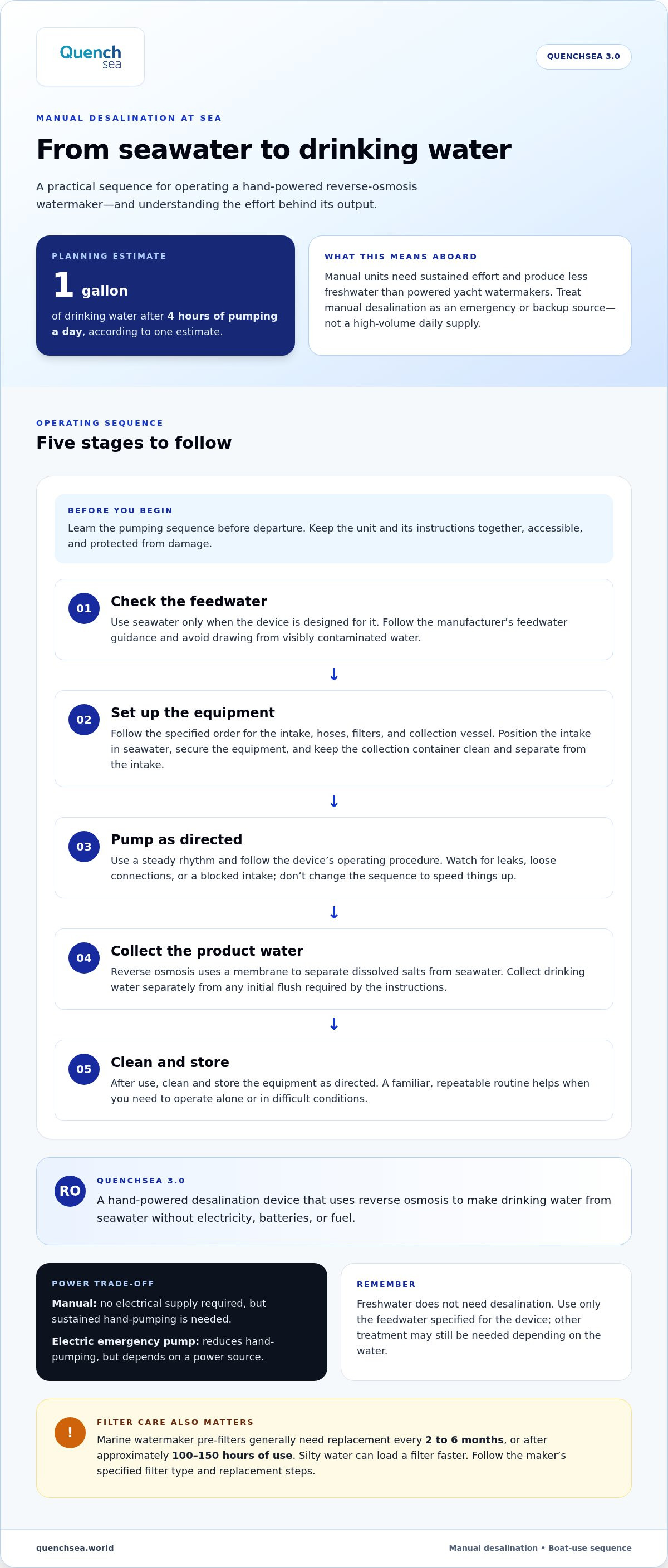
Manual units need sustained effort and produce less freshwater than powered yacht watermakers; electric emergency pumps reduce hand-pumping but depend on a power source. One estimate puts manual production at 1 gallon of drinking water after 4 hours a day of pumping.
A manual watermaker desalinated seawater through reverse osmosis, removing salt to produce freshwater. Freshwater does not need desalination. Use only the feedwater specified by the device’s manufacturer.
Remote Manual Operation
Remote use means operating without shore power, an inverter, or a battery. Keep the equipment accessible and secure it so movement won’t disrupt the intake or collection container. Before departure, learn the pumping sequence and locate the filters. A simple, familiar setup is especially useful when you need to operate alone or in difficult conditions.
Storage affects readiness. Keep the unit and its instructions together, protected from damage and accessible with the boat’s emergency supplies. Practise the procedure before relying on it, so you know how to position the intake, operate the pump, and collect the output.
Setup and Operation
Follow the manufacturer’s setup instructions for the intake, hoses, filters, and collection vessel. Place the intake in seawater, connect the parts in the specified order, then pump as directed. Keep the freshwater collection container clean and separate from the seawater intake. Don’t alter the sequence to speed up operation.
During use, pump at a steady rhythm and watch for leaks, loose connections, or a blocked intake. Collect product water separately from any initial flush required by the instructions. After use, clean and store the equipment as directed. A repeatable routine helps when conditions aboard are demanding.
Freshwater and Seawater Use
Reverse osmosis separates dissolved salts from seawater through a membrane. Freshwater does not necessarily need desalination, though it may need treatment for other reasons. Use seawater as feed only when the unit is designed for it, and follow its specified operating procedure. Water quality and intake conditions can affect operation, so avoid drawing from visibly contaminated water.
Before depending on a manual system, plan how its output fits the crew’s needs. The estimate of 1 gallon after 4 hours of daily pumping shows why it works better as an emergency source than a high-volume supply. A hand-powered device such as the QuenchSea 3.0 Desalination Device uses reverse osmosis to convert seawater into drinking water without electricity, batteries, or fuel.
Marine watermaker brands and product categories
Compare marine watermakers by power source, operating method, freshwater output, and maintenance needs. A manual unit, a 12/24V DC system, and a 110V/220V AC system serve different onboard setups.
Category comes before brand. Hand-operated models suit crews who need desalination without electricity, batteries, or fuel. Powered yacht watermakers suit higher-volume production, with output depending on system design and available power. Low-power models sit between these options, but still produce less freshwater than powered yacht watermakers. Match the system to your intended role, whether daily supply or emergency reserve.
Compare complete configurations, not just the main unit. A marine reverse-osmosis system may include a feed pump, pre-filters, membrane housing, hoses, and a product-water outlet. Check how each model handles intake, flushing, and storage. Follow the manufacturer’s freshwater-flushing procedure after use to care for the membrane. A compact system may be easier to stow, while an installed system may better suit routine production.
Product-water quality needs its own check. A total dissolved solids (TDS) meter measures dissolved particles in water, helping you compare the intake reading with the product-water reading. Record both readings under similar operating conditions. Properly operated and maintained marine reverse-osmosis watermakers remove up to 99% of salts, bacteria, and viruses. TDS readings alone don’t assess every aspect of water quality, so follow the manufacturer’s instructions for testing and use.
Operating conditions affect product-water readings. Intake salinity, membrane condition, and correct operation all influence the result. If readings change, inspect the filters and follow the manufacturer’s troubleshooting steps before assuming the membrane has failed. Log readings alongside flushes and filter changes to spot gradual shifts and support servicing.
Weight matters aboard, but the unit’s listed weight tells only part of the story. Include hoses, filters, storage containers, and any required power equipment when comparing configurations. A powered model may need a compatible inverter or electrical supply, while a manual design needs space for its pump and operation. Consider where every component will sit and whether it will remain accessible.
Use a practical comparison checklist: power source, stated output, included components, TDS monitoring method, flushing process, storage needs, and total carried weight. Compare those details with your boat’s layout and freshwater plan. This helps distinguish emergency-backup needs from the demands of regular marine water production.
Watermaker purchase prices
Watermaker prices depend on the system type, capacity, output, and included components. Compare the complete configuration with your vessel’s freshwater plan, not just the headline price.
Start with the job. A hand-operated model serves a different purpose from an electrically powered yacht system. Manual equipment avoids reliance on electricity, batteries, or fuel, while powered systems can support greater freshwater production. A typical cruiser needs about 5 to 10 gallons of freshwater per person per day. A boat watermaker should meet 24-hour freshwater needs in 3 to 5 hours of run time. Use these figures to define capacity before comparing products.
Next, identify the components each system needs. Check whether the configuration includes a pump, reverse-osmosis membrane, pre-filters, hoses, and product-water connections. Note any required power equipment, such as an inverter for an electrical setup. Limited storage may favor compact equipment, while an installed system may need additional parts to connect with onboard plumbing.
Before you buy a manual watermaker for your boat, compare products on a like-for-like basis. A manual emergency device and a powered watermaker differ in output and operation. Consider stated output, power source, included parts, installation needs, and maintenance. A lower purchase price may reflect a different configuration, so include the parts needed to use the system aboard.
Factor ongoing ownership into your decision. Filters need replacement, and membranes require care, flushing, and eventual replacement. Include routine consumables and any storage-preservation materials in your plan. Freshwater flushing after use is a maintenance step, not a substitute for replacing worn parts. Follow the manufacturer’s instructions.
A simple comparison sheet can help you decide whether to buy a manual watermaker for your boat:
- Capacity: compare expected daily demand with stated freshwater output.
- Configuration: list included pumps, membranes, filters, hoses, and electrical equipment.
- Installation: note what must fit the vessel’s layout and storage spaces.
- Ownership: account for filter changes, membrane care, and freshwater flushing.
Finally, weigh the purchase price against operating demands. A manual system avoids electrical requirements but takes human effort. A powered model may suit regular production when its output and electrical setup match the boat. Choose the system type first, then compare prices against the capacity and equipment your vessel needs.
Reverse osmosis components and freshwater yield
A marine reverse-osmosis system uses pressure to push seawater through a selective membrane. The membrane separates much of the dissolved salt from the product water, while concentrated brine leaves through a separate outlet. Core components commonly include an intake, pump, pre-filter, membrane housing, and product-water line. Each affects how the system operates and how much freshwater it produces.
The pre-filter catches suspended material before it reaches the membrane. The pump supplies pressure, and the membrane separates salt from the water. A powered yacht system draws energy from the boat’s electrical supply; a manual unit relies on human effort. Compact or modular designs can change how components fit aboard, but still need a suitable intake and correct operation.
Yield depends on system design, pressure, membrane condition, feedwater, and operating method. Manual and low-power watermakers produce less freshwater than powered yacht watermakers. That distinction matters when comparing emergency reserves with routine supply. A typical cruiser needs about 5 to 10 gallons of freshwater per person per day, while a boat watermaker should meet 24-hour freshwater needs in 3 to 5 hours of run time. These figures help frame capacity needs, not promise a specific device’s output.
Properly operated and maintained marine reverse-osmosis watermakers remove up to 99% of salts, bacteria, and viruses. That figure describes removal performance, not a substitute for correct handling or maintenance. Use the manufacturer’s operating procedure and keep product water separate from seawater and brine. A TDS meter can help compare dissolved-solids readings in feedwater and product water, but it doesn’t assess every water-quality factor.
Assess performance using consistent records. Note operating conditions, product-water output, and TDS readings together. If output drops, inspect the intake, pre-filter, pump operation, and membrane-care history before assuming a component has failed. Flush with fresh water after use and follow the manufacturer’s storage instructions to care for the membrane. A steady maintenance routine makes comparisons more useful over time.
For a manual system, weigh expected output against the crew’s daily demand and the effort required to produce it. Powered systems suit greater production when the vessel can support their energy needs. A hand-operated option fits a different role: producing freshwater without electricity, batteries, or fuel. Explore hand-powered seawater desalination as an option for emergency and off-grid needs.
QuenchSea: QuenchSea 3.0 Desalination Device
QuenchSea 3.0 Desalination Device is a portable, hand-powered option for making drinking water from seawater. It uses manual pressure and reverse osmosis to remove salt and reduce dissolved solids without electricity, batteries, or fuel. That makes it relevant for marine safety, emergency preparedness, life rafts, yachts, and off-grid coastal use. Consider it when you need a compact desalination option independent of onboard power. Because manual watermakers produce less freshwater than powered yacht systems, assess whether its role is backup or emergency supply, rather than assuming it will meet routine high-volume demand.
For a closer look at the device and its role aboard your boat, visit quenchsea.world.
Make your water plan ready for the next passage
Treat watermaker selection as part of a complete onboard water plan, not an isolated purchase. Decide who will operate the unit, where it will be stored, and how the crew will access its instructions. A practice run before departure can reveal handling or storage problems while conditions are calm. Keep the procedure simple enough for another crew member to follow.
If you’re preparing to buy a manual watermaker for your boat, consider the role you need it to fill: emergency reserve, off-grid support, or a supplement to existing supplies. QuenchSea offers the QuenchSea 3.0 Desalination Device for boaters seeking a hand-powered desalination option. Match your choice to your operating plan, then make the next step practical.
Explore QuenchSea 3.0 for your boat and move forward with a water plan built for your needs.
Frequently Asked Questions
How do I know what's the right size watermaker for my boat?
Size the watermaker against daily drinking and cooking needs, then compare demand with the unit’s stated output. A typical cruiser needs about 5 to 10 gallons of freshwater per person per day. For two people, use that per-person range to estimate daily demand, then decide whether the system must supply all of it or serve as a reserve. Also consider storage space and available operating time aboard.
Is the water produced by a watermaker safe to drink?
Test the output before drinking it, and do not rely on appearance alone; follow the device’s instructions for testing and handling product water. Do not assume filtered water is safe based on appearance alone - test a small amount first, and only drink when TDS reading is below 1 000 ppm. If the water tastes salty or unusual, do not drink it. Follow the device’s instructions for testing and handling product water.
What regular maintenance will my watermaker need?
Maintain the filters, pump, and membrane according to the manufacturer’s schedule. Track filter changes by calendar time and operating hours, since either may determine when replacement is due. Flush the system with fresh water after use, following its instructions. For extended storage, use the specified preservation process. Logging service dates and output changes helps identify maintenance needs.
What types of manual watermakers are available for boats?
Manual boat watermakers use human effort to pressurize seawater for reverse osmosis. Designs differ in their pumping mechanism, portability, filtration stages, and stated output. For example, QuenchSea 3.0 uses a hand lever and requires no external electricity, battery, or fuel. Compare how the unit is operated, how it fits your storage plan, and whether its intended emergency or off-grid role matches your onboard water needs.
How much does a manual boat watermaker cost in the United States?
Purchase cost varies with the system’s design and included equipment. Compare a hand-powered emergency device with a powered marine system by its components, filtration setup, stated output, and electrical requirements. Account for replacement filters and membranes, too. For a meaningful comparison, list all the equipment needed for operation and ongoing care rather than judging by purchase price alone.
Which manual watermaker brands and models are best for boating?
The best fit depends on whether you need emergency backup, off-grid support, or regular water production. Compare operation, output, filtration, storage demands, and maintenance instructions. QuenchSea offers the QuenchSea 3.0 Desalination Device, a portable, hand-lever-powered seawater desalination unit. It suits boaters seeking a manual option without external power. Match its intended role to your crew’s water plan rather than assuming every manual model meets the same needs.
How many gallons of drinking water can a hand-operated watermaker produce per hour?
Output varies by model and operating conditions. QuenchSea 3.0 is specified to produce 6-8 L/hr, or 1.60-2.10 US gal/hr. Its output may be lower with colder or saltier water, so plan using the needs of your crew and the conditions you expect. Treat the stated capacity as a product specification, not a universal rate for every hand-operated watermaker.
What pressure and effort are needed to operate a manual watermaker?
Pressure and effort depend on the model’s pump design. QuenchSea 3.0 operates at about 40 bar (580 psi), while its hydraulic system builds 60 bar (870 psi). The operator must work the hand lever; it doesn’t run continuously without effort. Pressure alone doesn’t describe how demanding operation feels, so consider the lever action and the pumping routine described in the device instructions.