

What happens when stored water runs low and onboard power fails? A marine distress kit water desalinator can add a backup source, but it shouldn’t replace the freshwater you carry. Keep immediate reserves accessible, then plan how you’ll produce more if an emergency lasts. A standard water filter won’t remove dissolved salt, so it can’t make seawater safe to drink.
Choosing the right device means weighing its output, operating effort, and independence from electricity, batteries, or fuel. This guide explains how hand-powered reverse osmosis turns seawater into freshwater, what to consider before adding a desalinator to your kit, and how to fit it into a layered marine safety plan. It also covers how QuenchSea 3.0 can serve as a manual water-production backup alongside stored water and other essential emergency equipment.
Key Takeaways
- Choose a marine distress kit water desalinator by weighing its power source, portability, operating effort, and maintenance needs.
- Compare stored water, manual desalination, and powered watermakers to understand the role each can play in an emergency.
- Keep a desalinator as a water-production backup, not a substitute for ready-to-drink reserves.
- Prepare the device before an emergency by choosing a storage location, learning its operation, and following its care instructions.
- QuenchSea 3.0 uses hand-powered reverse osmosis to produce freshwater without electricity, batteries, or fuel.
Why a Marine Distress Kit Needs a Water Desalinator Plan
A marine distress kit water desalinator is a portable device that converts seawater into freshwater. On a vessel or life raft, it can provide a way to produce water when carried supplies become limited. It is not an instant replacement for drinking water already on hand: stored reserves are ready to use, while a desalinator requires seawater, setup, and time and effort to operate.
Keep drinking water accessible for immediate needs, and treat water-production equipment as a backup for a longer disruption. A hand-powered device can add resilience because it doesn’t depend on onboard electricity, batteries, or fuel. Plan around the device’s operating steps and limitations as well as its potential value.
What does a water desalinator add to a distress kit?
Desalination uses methods such as reverse osmosis to separate salt from seawater. A manual device applies pressure to move water through a membrane, leaving much of the dissolved salt behind. For a general overview of the desalination process, including reverse osmosis, see Wikipedia. A standard filter may remove sediment or some microbes, but it doesn’t remove dissolved salt and therefore cannot replace a seawater desalinator.
The practical benefit is an additional source of water when carried reserves are limited. Manual operation can also help preserve independence if vessel power or fuel isn’t available. It still takes effort and depends on correct setup and use, so treat it as one option within your plan, not a reason to carry less immediate drinking water.
What should a marine water plan include?
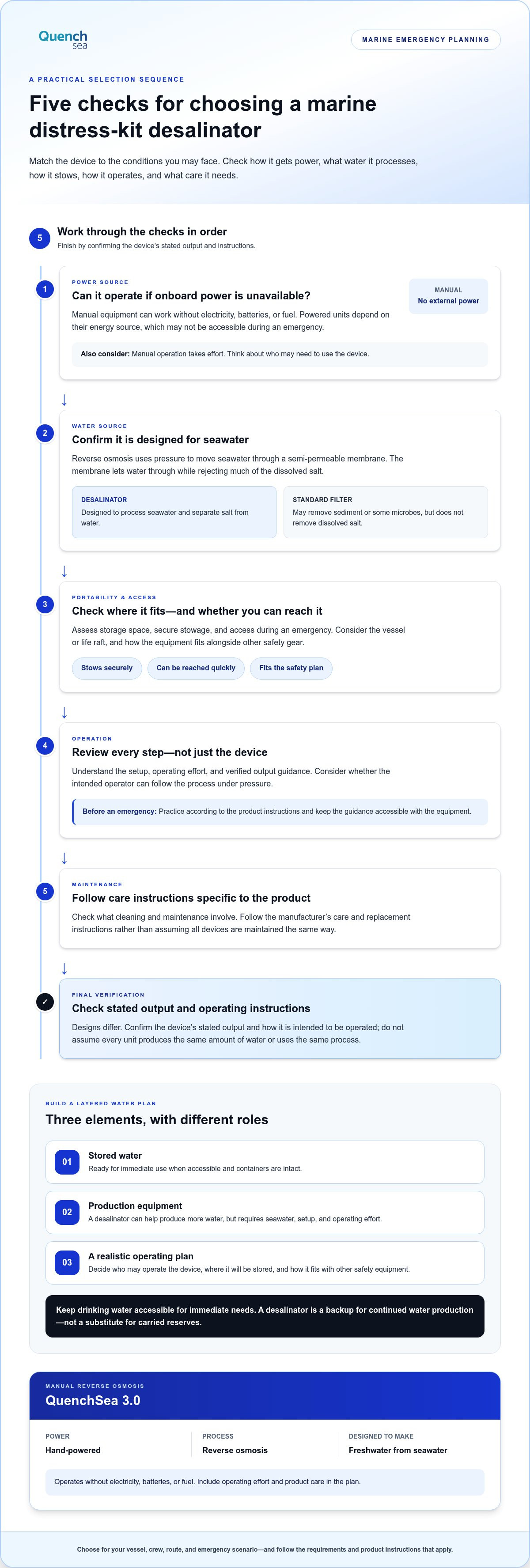
Build the plan around three elements: stored water for immediate use, production equipment for a continued supply, and a realistic operating plan. Consider who may need to operate the device, where it will be stored, and how it fits alongside other safety gear. Follow the product instructions for setup, handling, and care.
The right mix depends on the vessel, crew, route, and emergency scenario. A plan for a yacht may differ from one for a life raft. In either case, make sure the equipment people may need is accessible and operable. For more context on planning reserves in a raft, read this guide to life raft water supply. A desalinator belongs within the broader marine safety plan, alongside stored supplies and other emergency equipment.
How to Choose a Marine Distress Kit Water Desalinator
A marine distress kit water desalinator should match the conditions you may face, not just fit the available storage space. Compare options using five practical checks: power source, seawater access, portability, operation, and maintenance. Then review the device’s stated output and operating instructions. Designs differ, so don’t assume every unit produces the same amount of water or uses the same process.
Reverse osmosis uses pressure to push seawater through a semi-permeable membrane. The membrane allows water through while rejecting much of the dissolved salt. Pressure comes from a manual mechanism or a powered system. A filter that removes particles or microbes alone won’t remove dissolved salt from seawater.
Which power source suits an emergency at sea?
Hand-powered equipment can operate without electricity, batteries, or fuel, which matters if a vessel’s power systems are unavailable. Powered units depend on their energy source, which may not be accessible during an emergency. Manual operation takes effort, so learn the process and consider who may need to use the device.
The International Maritime Organization’s resolution on life-saving appliances includes language about manually powered reverse-osmosis desalination in life-raft water provisions. Use it as context, and follow the requirements that apply to your vessel and equipment.
Which practical details matter in a distress kit?
Evaluate the full operating sequence, not only the device. Check where it can be stowed securely and reached quickly, what setup involves, and what cleaning and maintenance the manufacturer specifies. Consider whether the intended operator can follow the steps under pressure. Practice according to the instructions before an emergency, and keep the guidance accessible with the equipment.
- Power: Identify whether the device is manual or depends on electricity, batteries, or fuel.
- Water source: Confirm it is designed to process seawater.
- Portability: Assess storage space, secure stowage, and access in an emergency.
- Operation: Review the steps, effort, and verified output guidance.
- Maintenance: Follow product-specific care and replacement instructions.
QuenchSea 3.0 is a portable, hand-powered reverse-osmosis device designed to make freshwater from seawater without electricity, batteries, or fuel. Read the QuenchSea 3.0 buyer’s guide for more product-specific context, and include operating effort and care needs in your plan. For a closer look at this manual option, explore QuenchSea 3.0 desalination.
Manual Desalinator vs Stored Water: Understand the Trade-Offs
Stored water and a desalinator serve different purposes. Bottled or packaged reserves are ready to drink; a manual desalinator can help produce more water later, but only after setup and physical operation. A powered watermaker can also produce freshwater, but it relies on its power source. A marine distress kit water desalinator belongs in a layered plan, not in place of immediate reserves.
| Option | Readiness | Depends on | Operating effort | Emergency role |
|---|---|---|---|---|
| Stored water | Available immediately if accessible and containers are intact | Carried supply and suitable storage | Little to none | First-access drinking water |
| Manual seawater desalination | Requires setup before producing water | Accessible seawater and a functioning device | Physical effort and correct operation | Backup freshwater production |
| Powered watermaker | Requires setup before producing water | Accessible seawater and available power or fuel, depending on the system | Varies by equipment and setup | Water production when its required power source is available |
When is stored water the better immediate option?
Stored water needs no pumping, assembly, or seawater intake. In the first moments of an emergency, that simplicity matters. Keep reserves where the crew can reach them, and consider how they’ll be protected and accessed if conditions change. The right reserve depends on the vessel, crew, route, and emergency plan, so avoid treating one quantity as universal. U.S. Coast Guard requirements for survival craft provide a regulatory reference for emergency equipment. The rules applicable to a specific vessel and craft should guide its preparation.
When can a manual seawater desalinator add value?
A manual device can provide another source of freshwater when seawater is accessible and stored supplies are being used. Independence from onboard electricity, batteries, or fuel can matter if those resources are unavailable. Water production isn’t instant: the operator must set up and work the device, and its output and operating effort depend on its design and instructions. Plan for that workload rather than assuming the device will replace ready-to-drink water.
Never treat seawater as a substitute. Its salt content makes it unsuitable for drinking; learn more about why drinking seawater is dangerous. Think of reserves as the immediate supply and desalination as a possible way to extend your water plan, provided the equipment is usable and the crew knows how to operate it.
How to Pack and Prepare a Marine Distress Kit Water Desalinator
A marine distress kit water desalinator is useful only if the crew can find it, access its required components, and operate it as directed. Prepare it before departure, not during an emergency. Use this sequence, adapting the stowage location and checks to your vessel and the product instructions.
- Learn the operating sequence. Read the manufacturer’s instructions before stowing the device. Identify the setup steps, how seawater enters the system, how to collect produced water, and any handling or care guidance. If practice is recommended, follow the instructions and safety guidance.
- Choose a secure, accessible location. Stow the device where it can be reached in the conditions you’re planning for, without blocking access to other safety equipment. Consider who will retrieve it and whether they can reach it if the usual route through the vessel is unavailable.
- Keep required components together. Use the manufacturer’s product guidance to identify what must accompany the device. Store those items with it or clearly mark their location, so the crew isn’t left searching for a component during an emergency.
- Check readiness as directed. Follow the product’s inspection, maintenance, and storage instructions. Don’t assume a universal checking interval or replacement schedule; use the guidance for the specific device and keep it accessible with the equipment.
- Make the plan known to the crew. Ensure relevant crew members know where the device is, where its instructions are, and who can operate it. Include water production in emergency planning alongside immediate drinking-water reserves.
How should you prepare before an emergency?
Familiarity reduces guesswork. Walk through the operating sequence before packing the device away, then make sure the intended users understand the steps. Follow the manufacturer’s directions for setup, handling, cleaning, and care. Avoid improvising procedures or relying on memory alone; keep the product instructions with the device or in a known, accessible place.
Where does the desalinator fit among other safety equipment?
Water production supports a broader response. It doesn’t replace communication equipment, flotation gear, or emergency signalling. Plan where the desalinator sits in relation to those items, considering the vessel layout, crew needs, and the emergency scenarios you’re preparing for. A well-packed kit should make the right equipment accessible without one item obstructing another.
For a hand-powered seawater desalination option, explore QuenchSea 3.0 and review its product instructions as part of your preparation plan.
QuenchSea 3.0: A Hand-Powered Water Desalinator for Marine Emergencies
QuenchSea 3.0 is a portable, hand-powered reverse-osmosis device designed to convert seawater into freshwater. It operates without electricity, batteries, or fuel. That makes it a practical backup when a vessel’s power system or fuel supply is unavailable, so the crew’s water plan doesn’t rely on those resources alone.
What makes QuenchSea 3.0 relevant to marine preparedness?
Designed for marine safety, life rafts, yachts, and emergency preparedness, QuenchSea 3.0 uses manual pressure to push seawater through a reverse-osmosis membrane. The process removes salt and reduces dissolved solids. Its listed output is 6-8 liters per hour, but an output figure doesn’t replace understanding the operating process. Read the product instructions and plan around the effort required to operate it.
Manual operation brings independence from electrical power and fuel, not effortless production. The operator must follow the specified setup and handling steps. Make sure intended users understand those directions and know where the device and required components are stored. Keep immediate drinking-water reserves as well: the desalinator is a production backup, not instant water.
Is QuenchSea 3.0 the right fit for your distress kit?
It suits crews looking for a manual way to make freshwater from seawater when onboard power isn’t available. Consider the full picture before adding it to your kit:
- Crew capability: Who can operate it, and are they familiar with the instructions?
- Storage and access: Can you stow it securely while keeping it reachable with its required components?
- Water reserves: What drinking water is available immediately, before production begins?
- Operating guidance: Have you reviewed the device’s current instructions for operation and care?
Consider a product’s stated output alongside correct operation and the user’s ability to keep the process going. Don’t treat a published figure as a guarantee of what every crew will produce in every emergency. Fit the device into a broader plan that accounts for stored water, other safety equipment, and the conditions your vessel and crew may face. It adds a water-production option; it doesn’t replace a complete marine safety plan.
To review this manual seawater desalination option for your preparedness plan, explore QuenchSea 3.0.
Build a Water Plan That Works Beyond the First Reserve
A dependable marine distress kit water desalinator plan starts with immediate drinking-water reserves and adds a way to produce more if an emergency continues. Stored water is ready to use; a desalinator takes setup and operation. Treat them as complementary layers, not alternatives.
Choose equipment around your vessel, crew, and likely conditions. Check its power source, seawater requirements, operating effort, storage needs, and care instructions. Make sure the people who may use it know how it works. A device can support your plan, but it doesn’t replace communication gear, flotation equipment, or other safety measures.
QuenchSea 3.0 is designed for marine safety and emergency preparedness. Its hand-powered reverse osmosis converts seawater without electricity, batteries, or fuel, offering a freshwater-production backup when those onboard resources aren’t available. Manual operation takes effort, and immediate reserves still matter. Explore QuenchSea 3.0 for your marine emergency water plan.
Prepare before you need it. A considered water plan helps you act with greater confidence when conditions change.
Frequently Asked Questions
What is a marine distress kit water desalinator?
A marine distress kit water desalinator is a portable device designed to convert seawater into freshwater for emergency use. A hand-powered reverse-osmosis model uses manual pressure and can operate without onboard electricity, batteries, or fuel. It adds a way to produce water when seawater is accessible, but it doesn’t replace ready-to-drink reserves, life-saving equipment, or a broader emergency plan. Follow the device’s instructions for operation and care.
Can a manual desalinator make seawater drinkable?
A manual reverse-osmosis desalinator is designed to remove salt and reduce dissolved solids from seawater. Use the device as directed, including its instructions for setup, operation, and care, rather than assuming every source or device condition is suitable. Output depends on proper use and the device’s specifications. A desalinator can provide a freshwater option, but it’s not a reason to drink untreated seawater or ignore product guidance.
Is a water desalinator enough for a marine distress kit?
No, a water desalinator alone isn’t a complete marine distress kit. It can support freshwater production when seawater is available, while stored water provides immediate access without setup or pumping. Build a layered plan around the vessel, crew, and possible emergency conditions. Include appropriate communication and life-saving equipment, and make sure the crew knows where the desalinator is stored and how to operate it.
How does a hand-powered seawater desalinator work?
A hand-powered desalinator uses human effort to create pressure that pushes seawater through a reverse-osmosis membrane. The membrane allows water through while rejecting much of the salt and other dissolved material. Production isn’t automatic or effortless, so operators need to follow the specific device’s setup and handling instructions. Use verified product information to understand expected output, and follow the manufacturer’s directions for care and maintenance.
Can a marine water desalinator work without electricity or fuel?
Yes, some manual desalination devices are designed to work without electricity, batteries, or fuel. QuenchSea 3.0 uses hand-powered reverse osmosis to convert seawater into freshwater without those external power sources. The operator still needs to provide physical effort and access seawater. Review the product instructions before packing or using it, and plan for it as one part of a wider emergency water strategy.
Should I carry stored water if my kit includes a desalinator?
Yes. Stored water is available immediately and doesn’t require setup, seawater intake, or pumping. A desalinator can offer another source when reserves are limited and conditions allow it to be used. The two serve different roles, so don’t rely on water production alone. Choose reserves and equipment to suit your voyage, crew, and applicable safety guidance, then make sure the water and device are accessible when needed.
Explore QuenchSea 3.0 to add hand-powered seawater desalination to your marine emergency water plan.