

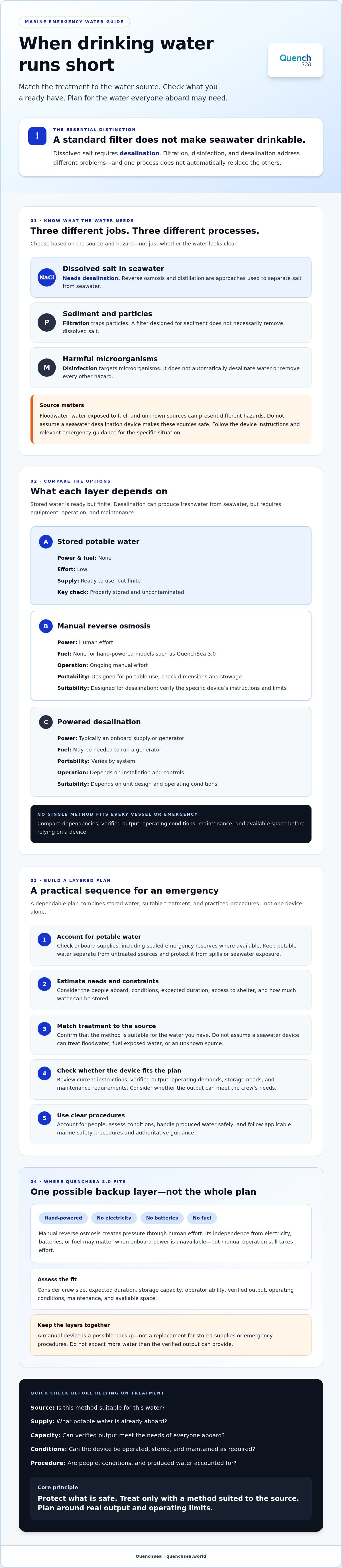
A standard filter won’t turn seawater into drinking water. Salt requires desalination, not just filtration. In a marine emergency, knowing the difference can shape your response. Emergency marine water purification starts with matching the method to the water source, then checking whether you can produce and store enough water for everyone aboard.
It’s reasonable to ask whether a backup device will work when power or fuel runs out, and whether its output justifies the effort and space it requires. A dependable plan doesn’t rely on one device alone. It combines stored water, suitable treatment, and practiced procedures.
This guide explains how desalination differs from other water treatment, compares practical emergency options, and helps you build a layered plan for life at sea. It also looks at manual reverse-osmosis devices such as QuenchSea 3.0 as one possible backup layer, not a replacement for stored supplies or emergency procedures. Before relying on any device, check its current instructions, verified output, operating demands, storage needs, and maintenance requirements.
Key Takeaways
- Learn why seawater needs desalination and how to prioritize existing safe water before choosing a treatment method.
- Compare stored water, manual reverse osmosis, and powered desalination by their dependencies and suitability for your situation.
- Use crew size, expected duration, storage capacity, and operator ability to judge whether a device’s output can meet your needs.
- Build an emergency marine water purification plan around clear steps for accounting for people, assessing conditions, and handling produced water safely.
- See where QuenchSea 3.0’s hand-powered operation without electricity, batteries, or fuel may fit as one layer in a broader backup plan.
Emergency marine water purification: what works when drinking water runs short?
Emergency marine water purification means securing drinking water through conservation, safe onboard supplies, and treatment suited to the water source. Start by checking how much potable water remains and protecting it from spills or seawater exposure. Then consider how many people need water, the conditions aboard, and how long you may need to manage before help or shelter is available. A treatment device is one part of the plan, not a reason to ignore existing reserves.
Why ordinary filters cannot make seawater drinkable
Many portable filters target sediment or microbes, but dissolved salt passes through filters that aren’t designed to remove it. Desalination separates salt from seawater; disinfection targets harmful microorganisms, while sediment filtration traps particles. These are different processes, and one doesn’t automatically replace the others. An overview of desalination technologies explains approaches such as reverse osmosis and distillation.
Clear water isn’t necessarily safe water. Open-ocean seawater calls for desalination, but floodwater, water exposed to fuel, and unknown sources present different hazards. Don’t assume a seawater desalination device can make those sources safe. Follow the device manufacturer’s guidance and relevant emergency instructions for the specific water source and situation.
What to do before treating water at sea
Check onboard potable water first, including sealed emergency reserves where available. Estimate demand based on the people aboard, conditions, expected duration, and access to shelter. For raft-specific preparation, see the life raft water supply guide. Keep reserves protected and account for them before deciding how much treatment capacity you may need.
- Identify all available potable water and keep it separate from untreated sources.
- Assess crew needs, conditions, and likely time until resupply or shelter.
- Choose a treatment method only after confirming it suits the source.
Every device has limits. Before relying on one, check its current instructions for suitable water sources, operating conditions, maintenance, and verified output. In an active emergency, follow applicable marine safety procedures and authoritative guidance. Treating the wrong source, or expecting more water than a device can provide, can undermine an otherwise sound plan.
How emergency seawater purification methods differ in real conditions
For emergency marine water purification, compare options by what they depend on and what they can realistically supply. Stored water is ready to use but finite. Desalination can turn seawater into freshwater, but it requires equipment, operation, and maintenance. No single method fits every vessel or emergency.
Stored potable water
Power: none. Fuel: none. Portability: depends on how it’s packed and stored. Operator effort: low. Seawater suitability: not applicable; it’s already potable if properly stored and uncontaminated.
Manual reverse osmosis
Power: human effort. Fuel: none for hand-powered models such as QuenchSea 3.0. Portability: designed for portable use, but check dimensions and stowage. Operator effort: ongoing manual operation. Seawater suitability: designed for desalination; confirm the specific device’s instructions and limits.
Powered desalination
Power: typically electricity from an onboard supply or generator. Fuel: may be needed to run a generator. Portability: varies by system. Operator effort: depends on installation and controls. Seawater suitability: depends on the unit’s design and operating conditions.
Manual reverse osmosis versus powered desalination
Reverse osmosis uses pressure to push seawater through a membrane that separates much of its dissolved salt from the water. A manual device creates that pressure through human effort; QuenchSea 3.0 is hand-powered and operates without electricity, batteries, or fuel. That independence can matter if onboard power is unavailable, but manual operation still takes effort. Powered systems may reduce hands-on pumping, yet depend on their power source and may require installation. Compare verified output, maintenance, space, and operating conditions before choosing.
Stored water, filters, and desalination solve different problems
Sealed potable-water reserves provide an immediate supply while a desalination device is set up or operated. Keep them in the plan: a watermaker is a backup layer, not a reason to carry less safe water. Ordinary filters can help remove particles or address specific contaminants, but don’t assume they remove dissolved salt. For a broader comparison of non-electric options, see manual boat water makers.
Solar stills and improvised methods may produce some water under suitable conditions, but don’t treat them as dependable, high-output replacements for stored supplies or a device with verified performance. Check manufacturer instructions and plan around realistic operating limits. To assess a hand-powered option as one layer in your setup, review the QuenchSea 3.0 desalination device.
Choosing an emergency marine water purifier: answer the output objection
A manual purifier has limits. It won’t provide unlimited water, and its advertised output may not reflect what you can produce in real conditions. Treat emergency marine water purification as a planning problem: estimate demand, check the device’s documented performance, and keep other safety measures in place.
Estimate needs without relying on a generic output promise
Start with the people aboard and the likely time before rescue or resupply. Consider conditions, access to shelter, and any individual medical needs that affect water planning. Separate drinking water from cooking, hygiene, and other uses so you don’t assume one output estimate covers every demand. Then compare your estimate with current manufacturer documentation, including the conditions under which output was tested. Don’t rely on a headline figure without checking how it applies to your situation.
Use this decision matrix before choosing:
- Crew and duration: How many people need water, and how long might the backup need to serve?
- Stored supply: How much sealed potable water is already aboard, and how is it protected?
- Power access: Will electricity or fuel remain available, or does a manual option better match the failure scenario?
- Portability and stowage: Can you reach, secure, and operate the device in the available space?
- Operator capability: Can the people expected to use it manage its mechanism safely, including under stress or rough conditions?
Check source compatibility, maintenance, and usability
Confirm that the purifier is intended for seawater and check its documented exclusions. A seawater device shouldn’t be assumed to treat floodwater, fuel-contaminated water, or an unknown source. Review the current manual for setup, cleaning, storage, inspection, and replacement-part requirements. Practice the procedure before an emergency, if the instructions allow it, so operators know the steps and effort involved.
Finally, treat water production as one layer of preparedness, not the whole response. Keep safe water reserves and include communication, navigation, and rescue planning in the vessel’s emergency procedures. A device’s verified output can help inform the plan, but it can’t replace those measures or guarantee supply in every condition.
How to use a marine water purification plan during an emergency
A written sequence helps make a water device a usable part of your response. In an emergency, assign one person to manage water while another handles communication, navigation, or other urgent tasks, if the crew allows. Keep the process simple, and follow the device’s current instructions rather than improvising under pressure.
A practical sequence for deploying an emergency water maker
- Account for people. Confirm who is aboard and identify immediate needs that affect water planning.
- Secure potable supplies. Locate onboard drinking water and sealed reserves. Protect them from seawater, spills, and accidental use for other purposes.
- Assess conditions and the source. Check whether the available source is seawater and whether the device is documented for that use. Don’t use an unfamiliar or contaminated source outside the manufacturer’s stated limits.
- Set up and operate as directed. Follow the manual for assembly, operation, and any checks. Don’t guess at steps or substitute a different procedure.
- Collect water cleanly. Use a clean, suitable container reserved for drinking water. Keep it covered and separate from untreated water and other supplies.
- Track the supply and device. Record stored and produced water, along with any issues or checks, using the manufacturer’s guidance.
Routine preparation matters. Before departure, inspect the device and review its current manual, including setup, cleaning, storage, and maintenance instructions. If the manufacturer permits practice operation, let intended users learn the mechanism before they need it. First-time use during an emergency adds uncertainty when time and attention are already limited.
Build a layered backup plan for sea and shore
Desalination capability is only one part of preparedness. Pair it with sealed drinking water, clear responsibility for monitoring supplies, and a realistic communication, resupply, or rescue plan. For broader preparation, consult the survival desalination device guide. For disaster-relief planning, see tactical disaster-relief water supply options.
Review the QuenchSea 3.0 desalination device as one possible manual option in a broader plan. Confirm its current operating and maintenance instructions before relying on it, and keep emergency procedures and safe-water reserves in place.
Where QuenchSea 3.0 fits in an emergency marine water plan
QuenchSea 3.0 is a portable, hand-powered reverse-osmosis device designed to desalinate seawater. Its defining feature for emergency planning is that it operates without electricity, batteries, or fuel. That can make it relevant when a vessel’s power supply is unavailable, but it still requires an operator and should be treated as an additional water option, not a guaranteed sole supply.
What the QuenchSea 3.0 is designed to do
Reverse osmosis uses pressure to move water through a membrane that separates much of the dissolved salt. QuenchSea 3.0 uses manual operation to drive this process. It’s designed to remove salt and reduce dissolved solids from seawater, not to treat every kind of contaminated or unknown water source. Check current product documentation for verified output, water-source suitability, operating conditions, and any stated limitations before relying on it.
This makes the device a potential layer for marine safety and preparedness, including use aboard yachts or in life-raft planning. Its value depends on your actual needs: how many people may need water, how long the device might be used, whether someone aboard can operate it, and how much space you can allocate to the unit and its care.
Decide whether it belongs in your preparedness kit
Before adding any watermaker, check these practical points:
- Demand: Compare crew needs and likely emergency duration with documented device output. Don’t assume a manual unit can meet every need.
- Operator readiness: Consider whether intended users can follow the instructions and sustain the required manual operation.
- Storage and maintenance: Confirm stowage needs and review current guidance for inspection, cleaning, and storage.
- Plan fit: Keep sealed potable-water reserves and established marine emergency procedures in place alongside the device.
A useful emergency marine water purification plan matches equipment to the situation and accounts for its limits. Confirm the latest instructions and specifications, then judge whether the device suits your vessel, crew, and preparedness needs. To review the product for that purpose, evaluate QuenchSea 3.0 for marine preparedness.
Build your water plan before the next departure
Reliable emergency marine water purification depends on preparation, not a single piece of equipment. Match the treatment method to the water source, estimate realistic needs for the people aboard, and confirm a device’s output and operating limits in its current documentation. Keep potable reserves and established emergency procedures in the plan, too.
QuenchSea 3.0 offers a manual desalination option for seawater, operating without electricity, batteries, or fuel. It’s designed for marine safety, emergency preparedness, and off-grid coastal use. As with any device, review its instructions and maintenance requirements, and consider whether its operation, storage, and documented performance fit your crew and vessel. Treat it as an additional layer, not a guaranteed sole supply.
Review QuenchSea 3.0 for your marine preparedness plan and check how it fits your specific requirements. A clear plan, familiar equipment, and realistic expectations can help you act with greater confidence if water becomes scarce. Prepare before you leave shore, and give your crew a stronger foundation for the unexpected.
Frequently Asked Questions
Is seawater safe to drink after passing it through a regular portable water filter?
Usually not. Standard portable filters typically target particles or certain microorganisms, not dissolved salts, so don’t assume they make seawater potable. Use equipment specifically designed for desalination and follow its current instructions. If the source may contain fuel, chemicals, or other pollutants, first confirm that the device is suitable for those contaminants. Clear appearance alone doesn’t establish that water is safe to drink.
Can a manual desalination device work without electricity or fuel?
Yes, some manual reverse-osmosis devices are designed to operate without electricity, batteries, or fuel. They still require correct setup, operator effort, suitable seawater, and operation within the manufacturer’s limits. Check the specific device’s instructions and verified performance information before relying on it. Keep stored potable water as a backup. A manual watermaker is a finite-capacity tool, not an unlimited supply.
How much drinking water can an emergency marine water maker produce?
Output depends on the device, seawater conditions, operating method, and the manufacturer’s stated test conditions. Don’t use a generic figure from another product to estimate your supply. Check current documentation for expected output and workload, then compare those figures with the number of people aboard and the likely time before rescue or resupply. Maintain other safe-water reserves where practical, since actual needs and operating conditions can vary.
What happens if a seawater purifier is used on floodwater or chemically contaminated water?
A device designed for seawater desalination may not remove the chemicals, fuel, or other contaminants found in floodwater. Salt removal alone doesn’t make an unknown source safe. Check the manufacturer’s approved source-water limits and follow local emergency or public-health guidance. If the source falls outside the device’s stated limits, don’t rely on it for treatment. Use another verified safe-water supply instead.
Do I still need emergency drinking-water storage if I carry a desalination device?
Yes. A device can take time and effort to operate, may need inspection or maintenance, and must be used within its specified conditions. Stored potable water gives you an immediately available reserve and can cover interruptions. Plan around the people aboard, likely duration, and established emergency procedures. Treat desalination as one layer in your emergency marine water purification plan, not the whole plan.
How should I prepare a manual water maker before going offshore?
Read the current manual and confirm the device is intended for your water source. Before departure, inspect and stow it as directed, review maintenance requirements, and check any components or consumables specified by the manufacturer. Learn the operating steps in advance, and practice only as the instructions allow. Include the device alongside potable-water reserves, communication plans, and established marine safety procedures.
Is QuenchSea 3.0 intended for emergency marine water purification?
QuenchSea describes its 3.0 device as a portable, hand-powered reverse-osmosis system designed to desalinate seawater without electricity, batteries, or fuel. Its stated applications include marine safety and emergency preparedness. Before relying on it, check current operating instructions, source-water suitability, verified output, and maintenance details. Keep other safe-water supplies and emergency procedures in your plan; the device should be one layer, not your sole source.