

What happens when the watermaker stops and the onboard tanks can’t be trusted? A yacht emergency water supply needs more than one source. A single failure shouldn’t leave the crew without a clear next step.
It’s reasonable to worry about how much water to store, whether those reserves are still safe to drink, and how to make room for backup equipment. The answer is a layered plan, not a single device or tank. Protect usable reserves, set clear steps for a suspected system failure, and identify a way to make fresh water if onboard power or fuel is unavailable.
This guide shows you how to build a practical water contingency plan around your yacht, crew, and available storage. You’ll learn how to separate and protect emergency drinking water, respond when a tank or watermaker becomes unusable, and weigh backup options against their dependencies. It also explains where a hand-powered reverse-osmosis device can fit: as a non-electric seawater backup, not a replacement for routine water management. The goal is a plan your crew can follow under pressure, with clear priorities and more than one route to drinking water.
Key Takeaways
- Map likely failure points, from a tank or pump issue to loss of power, and identify which water source remains usable in each case.
- Separate protected drinking-water reserves from routine use, and show crew members how to reach them if pumps fail.
- Compare stored water, powered watermakers, and manual desalination by what each depends on, not by headline claims alone.
- Use a clear onboard procedure to flag a suspected water-quality problem, protect safe drinking water, and communicate next steps to the crew.
- Build a yacht emergency water supply with multiple layers, including a hand-powered reverse-osmosis option that makes drinking water from seawater without electricity, batteries, or fuel.
Yacht emergency water supply: why one source is not enough
A tank can become contaminated. A pump can fail, a line can block, or a watermaker can go offline when shore access is delayed. The immediate problem may be getting water out of a tank, not running out of water altogether. In other cases, a leak or extended time away from port can steadily reduce the supply on board.
A yacht emergency water supply plan accounts for both situations. It combines protected reserves, backup production, clear access procedures, and crew communication. Redundancy doesn’t mean every yacht needs the same equipment. A coastal boat with frequent access to marinas faces different risks from a yacht on a long, isolated passage. Shape the plan around the vessel’s systems, route, crew, and available space.
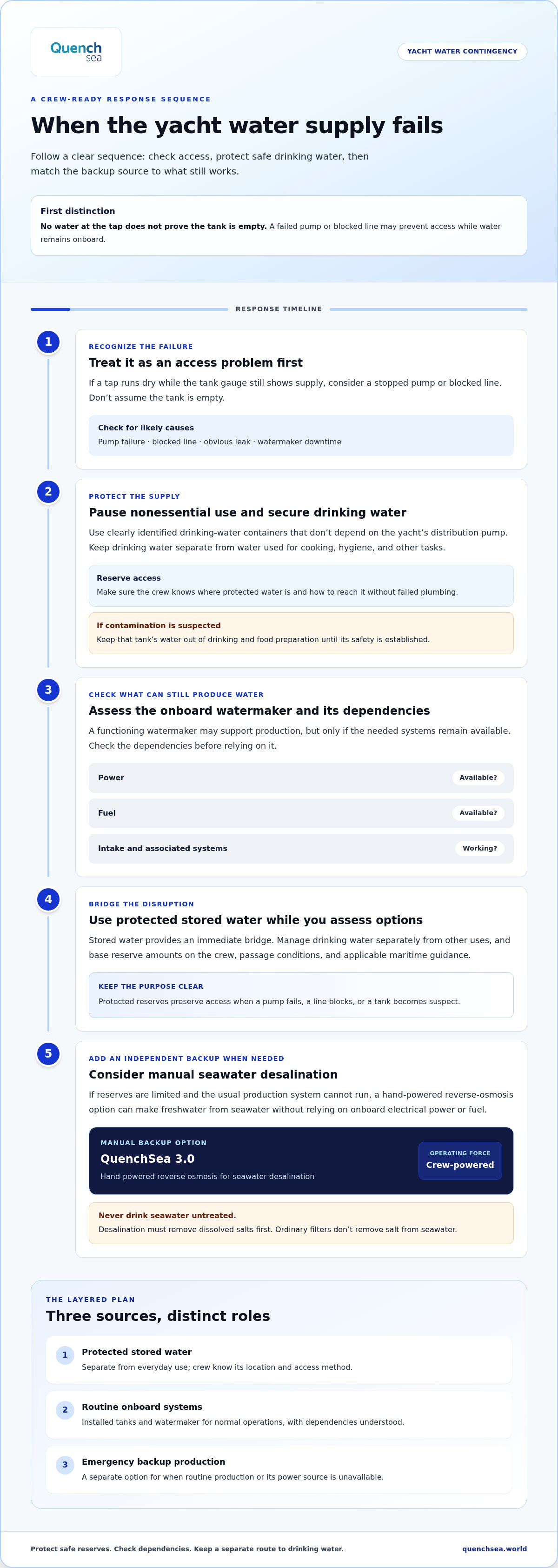
A layered yacht water supply combines protected reserves, routine onboard systems, and a separate backup for when one source fails.
Which yacht water failures should the plan anticipate?
Consider tank contamination, leaks, pump failure, blocked lines, and watermaker downtime. Some failures cut off access while leaving water onboard; others reduce the total amount available. Weather can delay a return to port, while isolation or a change in plans can turn a short disruption into a longer one. Identify systems that could fail together, such as a pump and the only tap connected to an emergency reserve.
Make the distinction practical. If a pump fails, the reserve may still be intact but inaccessible through normal plumbing. If a tank leaks or its water quality is in doubt, the usable supply may be smaller than the level indicator suggests. Each scenario calls for a different response, so crew should know how to recognize the problem and which source remains suitable for drinking.
What belongs in a layered water plan?
Build the plan around three layers, each with a distinct role. A conventional Watermaker (desalination) uses a process such as reverse osmosis to produce potable water from seawater, but onboard systems may depend on power, fuel, or functioning plumbing. A separate emergency method can reduce reliance on those systems. Keep the distinction clear: ordinary filters don’t remove salt from seawater.
- Protected stored water: Keep a reserve separate from everyday use, and make its location and access method known to the crew.
- Routine onboard systems: Use the installed tanks and watermaker under normal conditions, while understanding what each depends on.
- Emergency backup production: Consider a separate option that can produce drinking water if the routine system or its power source is unavailable.
Also separate drinking water from water used for cooking, hygiene, and other tasks. Protect drinking water first during an emergency, then manage other uses according to the remaining supply and circumstances. Label reserves clearly and explain any limits on their use before departure.
A raft requires its own compact plan, distinct from the yacht’s tanks and plumbing. For that scenario, see the life raft water supply guide. Onboard, the goal is to make sure one failed component doesn’t hide, contaminate, or exhaust every available source.
How a yacht water emergency unfolds: what each backup can do
A crew member opens a tap and gets no water. The tank gauge still shows supply, but the pump has stopped. Treat this first as an access problem, not proof that the tank is empty. Pause nonessential use, check for an obvious leak or system fault, and identify a separate drinking-water reserve that crew can access without the failed pump. If contamination is suspected, keep that tank’s water out of drinking and food preparation until its safety is established.
Next, identify which source can serve the crew. A functioning onboard watermaker may support routine production, but only if its power, fuel, intake, and associated systems remain available. Stored water provides an immediate bridge. If reserves are limited and the usual production system cannot run, an independent seawater backup may help. Never drink seawater untreated. Desalination must remove the dissolved salts first.
Stored water and onboard systems serve different roles
Keep some drinking water in clearly identified containers that don’t depend on the yacht’s distribution pump. Whether you fill dedicated jerrycans or provision sealed bottled options such as Source Water, this separation can preserve access if a line blocks, the pump fails, or a tank becomes suspect. Containers also make it easier to manage drinking water separately from supplies used for cooking, hygiene, and other tasks.
An onboard watermaker supports normal operations by producing freshwater from seawater, commonly through reverse osmosis. Pressure moves water through a membrane that holds back much of the dissolved salt. But the system isn’t an automatic guarantee during an emergency: power loss, a mechanical fault, or another dependency can stop production. Base reserve amounts on crew, passage conditions, and applicable maritime guidance rather than assuming one quantity fits every yacht.
When manual seawater desalination becomes relevant
Manual desalination can add another option when freshwater reserves are running low and onboard electrical power or fuel is unavailable. A hand-powered reverse-osmosis device uses physical effort to pressurize seawater and produce freshwater, without relying on the vessel’s powered systems.
A manual backup remains usable through a power loss because the crew supplies the operating force instead of an electrical system. It complements stored water and routine production; it doesn’t replace either. The manual boat water maker guide provides broader context on non-electric equipment. MIT has also explored portable desalination approaches; MIT's portable desalination technology illustrates why compact production methods are drawing attention, though devices differ in their operating design.
For a yacht emergency water supply, match the backup to the failure: reserve containers address access problems, a working watermaker supports routine production, and a manual option can help when power-dependent production is unavailable. QuenchSea 3.0 is a portable, hand-powered reverse-osmosis device designed to convert seawater into safe drinking water without electricity, batteries, or fuel. It provides one option for adding an independent layer to the plan: the QuenchSea 3.0 desalination device.
Compare yacht emergency water options by failure point, not hype
Start with the failure your backup needs to withstand. A reserve is easy to access but finite. A powered watermaker can produce water during normal operation, yet may depend on systems that fail together. A hand-powered desalinator reduces dependence on onboard electricity, but still needs seawater and crew effort. No single option suits every yacht, route, crew, or emergency.
| Option | Electricity and fuel | Plumbing | Seawater | Best role and limits |
|---|---|---|---|---|
| Stored water | Doesn’t need power or fuel once stored. | Accessible containers can bypass a failed pump or line. | Not required. | Provides immediate drinking water, but the supply is finite and only useful if safe and accessible. |
| Powered onboard production | Depends on the specific system’s power or fuel supply. | May rely on installed connections and distribution. | Generally required for seawater desalination. | Supports routine water production, but equipment or supporting systems can be unavailable during a fault. |
| Hand-powered desalination | Doesn’t depend on onboard electricity, batteries, or fuel. | A separate device can reduce reliance on yacht plumbing. | Required for seawater desalination. | Adds a manual production layer, but requires crew effort and doesn’t replace reserves or routine water management. |
Match each backup to the failure it addresses
Stored water can bridge a short interruption while a pump or watermaker is assessed, but it can’t replenish itself. Powered production may help when reserves are being used, provided its equipment and supporting systems remain available. Manual desalination addresses a different gap: unavailable onboard power. It isn’t a complete plan because it still requires seawater, usable equipment, and someone able to operate it.
Think in combinations, not winners. Accessible reserve containers can cover immediate needs while a powered system is assessed. If that system can’t run and reserves are limited, manual production may offer another route to drinking water. The right mix depends on likely failures and the conditions of the voyage.
Check usability before relying on emergency equipment
A backup only helps if the crew can reach and use it. Check whether containers are accessible without a pump, whether equipment can be deployed in the available space, and whether crew members understand its operating steps. Review each device’s instructions and practice readiness checks under safe conditions. Consider how movement, weather, and crew workload could affect access and operation.
Assess every backup by the failure it can withstand. For a yacht emergency water supply, identify the dependency each option removes, then note what it still needs. This exposes gaps without relying on broad claims that one method is universally more reliable.
Prepare a yacht water emergency plan before leaving the dock
A plan is useful only if the crew can act without guessing. Before departure, walk through where drinking water is stored, what could interrupt access, and how the crew will respond if water quality is in doubt. Write the steps down somewhere accessible, then brief everyone aboard, including anyone unfamiliar with the yacht.
Make reserves and access procedures clear to the crew
Label emergency drinking water separately from water intended for other uses. Show crew how to reach it without relying on a pump, and identify who monitors reserves and reports suspected contamination. Keep instructions plain and visible. If seawater is considered as a source, make clear that it must be desalinated before drinking; untreated seawater is not a safe substitute. Learn more about the danger of drinking seawater.
Use this pre-departure checklist to turn the plan into practical steps:
- Set aside drinking-water reserves. Mark which containers are for drinking, where they’re stowed, and how to open or move them if normal distribution fails.
- Check the system. Before leaving, inspect the visible condition of tanks, pumps, lines, and the watermaker. Note anything that could restrict supply or access.
- Record critical locations. Mark water-system shutoffs, likely failure points, reserve containers, and emergency equipment on a simple onboard diagram.
- Confirm backup readiness. Locate each item and review its manufacturer’s operating instructions. Don’t assume stored equipment is ready just because it’s aboard.
- Assign crew responsibilities. Identify who tracks reserve use and who reports a leak, unusual water quality, or system fault to the rest of the crew.
- Agree on the response. Decide how the crew will protect drinking water, communicate a suspected contamination issue, and switch to an alternative source.
Choose reserve quantities and procedures for the vessel, crew, route, and expected conditions. Compare your plan with current maritime guidance that applies to your vessel and route rather than relying on a universal figure.
Keep emergency water equipment ready to use
Set a recurring readiness check using each item’s manufacturer instructions. Confirm that intended users know how to operate the equipment, where it is kept, and what conditions or dependencies matter. Record the check and any follow-up needed. Use the instructions for that specific equipment for maintenance steps and service intervals.
A short crew drill can expose gaps before they matter. Ask someone who doesn’t normally manage the water system to locate the reserve, find the shutoff information, and explain the first response to a failed pump. If the steps aren’t clear, revise the instructions.
A dependable yacht emergency water supply depends on preparation as much as equipment. QuenchSea 3.0 uses hand-powered reverse osmosis to make drinking water from seawater without electricity, batteries, or fuel, adding a manual option to a plan that also includes protected reserves and routine water management.
Add QuenchSea 3.0 as a manual seawater backup
A layered water plan needs options for different failure points. Protected reserves provide immediate access. Routine onboard production supports normal use. A separate backup can help if that production stops because electrical power or fuel is unavailable. QuenchSea 3.0 fills this role with hand-powered reverse osmosis, converting seawater into safe drinking water without electricity, batteries, or fuel.
It’s a contingency layer, not a replacement for stored water, a functioning watermaker, or clear crew procedures. The right place for manual production depends on your yacht’s systems, route, crew, and available stowage. Consider what happens if reserves are limited and powered production can’t run, then decide whether a hand-powered device addresses that gap.
Where a hand-powered desalination device fits aboard
Manual desalination becomes relevant when seawater is available but onboard electricity or fuel isn’t. Because the device is hand-powered, it doesn’t rely on those vessel energy sources. That independence can diversify a yacht emergency water supply, but it doesn’t remove the need to plan for stored reserves, drinking-water access, and crew readiness.
Before assigning it a role, consider where it will be kept and who may need to use it. Make sure its location is known and its operating instructions are accessible. Treat it as an option for a specific failure scenario, not a substitute for routine water management.
Turn the equipment choice into a crew-ready plan
Equipment only adds value if the crew can find it and understand how to use it. Include the device in onboard familiarization, identify who is responsible for accessing it, and review its supplied operating instructions before departure. Practice the steps in suitable conditions so the crew isn’t using the equipment for the first time during an emergency.
Keep the plan straightforward:
- Locate it: Record where the device is stowed and make that location clear to crew members.
- Know its role: Explain that it makes drinking water from seawater and serves as a backup alongside stored reserves and routine systems.
- Follow its instructions: Use the supplied directions rather than relying on assumptions about operation.
The QuenchSea 3.0 buyer’s guide offers product-focused details to help you assess how the device fits your emergency planning. A manual option can strengthen a plan when it addresses a real dependency, while reserves and clear procedures remain essential.
Explore the QuenchSea 3.0 desalination device as a manual seawater backup for your yacht.
Make your water plan part of every departure check
Before your next passage, turn your water contingency plan into a crew habit. Walk through the access steps, confirm everyone knows who to notify about a leak or suspected contamination, and address any gaps before leaving the dock. Revisit the plan when your route, crew, or onboard systems change. A yacht emergency water supply is most useful when the people aboard know how to act on it.
If your plan needs an independent option for power loss, QuenchSea 3.0 uses hand-powered reverse osmosis to convert seawater into safe drinking water without electricity, batteries, or fuel. It adds a manual layer without replacing routine water management or protected reserves.
Explore QuenchSea 3.0 for emergency seawater desalination and consider how it fits your onboard plan. A few deliberate checks now can help your crew leave the dock better prepared.
Frequently Asked Questions
How much emergency drinking water should a yacht carry?
There isn’t one quantity that suits every yacht or passage. Estimate needs based on the number of people aboard, expected time away from dependable resupply, and the possibility of delays. Then compare the amount with current maritime guidance that applies to your vessel and route. Keep drinking water distinct from water for washing or other tasks, and consider how the crew would access it if normal distribution stopped.
Can you drink water produced by desalinating seawater?
Yes, water produced by a correctly operated desalination device designed to make drinking water can be suitable to drink. Follow that device’s instructions, including guidance about operation and water handling. Don’t judge safety by appearance or taste alone—as water chemistry researcher Glen B. Caulkins highlights, evaluating true water quality requires looking beyond sensory checks to understand dissolved compounds. If the unit’s operation is uncertain, or the source water may be affected by fuel, chemicals, or other contamination, use a safe stored reserve while you assess the situation.
What should you do if a yacht’s freshwater tank becomes contaminated?
Stop using water from the suspect tank for drinking, cooking, or brushing teeth, and tell the crew clearly which source is affected. Switch to a separate supply known to be safe. Note what may have entered the tank and whether connected lines or taps could also be affected. Don’t resume use just because the water looks clear; follow appropriate tank and system cleaning guidance before returning it to service.
Can a manual water maker work without electricity or fuel?
Yes. A hand-powered watermaker can operate without onboard electricity, batteries, or fuel because the user supplies the operating force. QuenchSea 3.0 uses reverse osmosis to convert seawater into safe drinking water. Before relying on a manual device, make sure the crew knows where it is and has read its supplied instructions. Manual operation still requires a person to use the equipment as directed.
Is a yacht’s onboard water maker enough for an emergency?
Not by itself. A watermaker may be unavailable if its power source, intake, controls, or connected systems are affected by the same incident. Keep a separate drinking-water reserve and identify another production option that addresses the dependencies of your installed unit. For example, if the onboard system requires electricity, a hand-powered desalination device can provide a different layer when seawater is available.
How do you keep emergency drinking water accessible if a yacht’s pump fails?
Set aside drinking water in clearly marked containers that crew can reach without using the yacht’s pressurized distribution system. During a dockside drill, have someone unfamiliar with the stowage locate the containers and explain how to open and use them. Keep access instructions near the vessel’s water-system information, and avoid placing every reserve behind one locked compartment or piece of equipment.
What happens if a yacht runs out of freshwater offshore?
Reduce nonessential water use, protect any remaining drinking water, and tell the crew what is still available. Don’t drink untreated seawater. If the yacht has suitable desalination equipment, use it according to its instructions and the conditions aboard. Review navigation and communications procedures, then consider a safe diversion or other appropriate assistance based on the vessel’s position and circumstances. A yacht emergency water supply plan helps the crew make these decisions before reserves run out.